Halloween Sale
50% off Premium Yearly
Latest Stock Buy or Sell? Make More Informed Decisions!
Today, John Zechner commented about whether APTX.TO, RCI.B.TO, CPX.TO, AAPL, BCE.TO, GEI.TO, ENB.TO, ATD.TO, HWX.TO, TVE.TO, ASTL.TO, T.TO, MDA.TO, SHOP.TO, TXG.TO, CNQ.TO, ATRL.TO, WSP.TO, BDT.TO, BEP.UN.TO, TD.TO, NOA.TO, TRP.TO, EQX.TO, CAE.TO, ATZ.TO are stocks to buy or sell.
- Page 1/4
'%20fill='%23000000'%3e%3cg%20id='Rating-Card'%20transform='translate(120.000000,%20487.000000)'%3e%3cpath%20d='M848.295367,82.286474%20C848.68919,81.9045087%20849.327703,81.9045087%20849.721525,82.286474%20L854,86.4361302%20L858.278475,82.286474%20C858.672297,81.9045087%20859.31081,81.9045087%20859.704633,82.286474%20C860.098456,82.6684393%20860.098456,83.2877274%20859.704633,83.6696927%20L854.35654,88.856763%20C854.159628,89.0477457%20853.840372,89.0477457%20853.64346,88.856763%20L848.295367,83.6696927%20C847.901544,83.2877274%20847.901544,82.6684393%20848.295367,82.286474%20Z'%20id='Path'%3e%3c/path%3e%3c/g%3e%3c/g%3e%3c/g%3e%3c/svg%3e)
His concern is what if one of those legs gives out? When he hears about the supposed strength of the super-powerful US economy, he thinks AI spending alone accounts for about 50% of the growth over the past year. When you look back at the tech bubble, tech accounted for about 30% of the growth in the US economy. So AI is much bigger.
The rest has been the wealth effect from the higher-end cohort. Their spending has been more reflected in areas such as travel and concerts. But the remainder of consumers in the economy have faced higher food and gasoline costs. That segment isn't as robust -- look at results from WMT, HD, and others.
When you're really riding hard on this AI spending, the stock market continues its wealth effect, and higher-end spending continues. Lose any one of those and you're left with a pretty sloppy economy.
His firm has been getting more defensive in their holdings. Thinks that, ultimately, the move in interest rates will be down. Inflation will come under control, and we're not going to see the strength continuing in these rates.
He sold all his banks stocks on high valuation. He'd rather move into other areas that are unloved, out of favour, and where valuations are better.
Tech stocks -- sold semiconductors and data centres, kept the tech giants.(A Commentary)
Sep 23, 2026For this next phase going forward, you have to look for who's going to monetize AI the best? The major cloud players (MSFT, AMZN, GOOG) are growing 40-50% plus. They're monetizing better than anybody else.
When you look at AI spending and the capex (increasing every year and forecast to go to $1T next year), he's not sure it necessarily continues at that rate. There are a couple of problems. The big spenders are suddenly FCF-negative. They don't have as much money, and they're borrowing at a higher rate. To the degree you slow that down, that's the biggest leg of that 2-legged stool he talked about earlier.
There's a lot of air underneath all these valuations.
It was completely on the valuation. He's more trade-oriented, so he can move in and out of positions.
Valuations on Canadian banks are at unsustainably high levels, now around 15+x PE compared to historical levels of 10-11x. A lot of the growth in earnings has been strong. But it's been driven by capital markets, trading activity, and wealth management -- all things that are tied to a strong stock market continuing. Yields aren't that attractive right now.
It's all tied to that 2-legged stool. Continued AI spending leads to a strong stock market. To the degree you don't sustain that, you're not going to get the higher multiples and you're not going to get the same level of earnings growth.

In a softer consumer environment, he doesn't own any retailers. Has done fantastically well over last couple of years. They'll have to have blowout numbers to support the higher multiple, but you can't count on that. Retail stocks, such as GRGD, may have gotten ahead of themselves and are selling off.

He added some recently. Just renewed US contract, despite Trump's statements. Their products are just so integrated. Should benefit from improvements in rejigged commercial division. Canadian industrial companies that specialize in defense spending will be at the front of the line to benefit from increased fiscal spending in Canada.
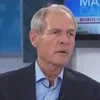 John Zechner
He agrees. The debasement trade will go on. Major international investors are pulling out of US treasuries. There will ultimately be downward pressure on the USD, despite the Fed tightening rates a bit (headwind for gold).
Thinks you're going to see central banks continue to diversify massive US holdings. Even if a few drops of that make it into the gold bucket, it'll take gold higher.
Stocks themselves are cheaper than they've been in decades. The biggest thing to try to avoid is geopolitical risk. Stay away from the West African players.
He expects the US economy to slow down a little bit, and the US dollar to weaken. Thinks the Fed may raise one more time, and then we're into decreases. Then the gold trade will come back on. Thinks we still have $5-6k on gold quite easily. Doesn't take much money diverting to gold from the massive US treasury holdings by China, Japan, the Norwegians, pension funds, and other major players to make gold go higher.

Likes it here. NA assets, less geopolitical risk. Decent valuation -- trading below NAV, ~4x operating cashflow. He's been adding on recent weakness.
John Zechner
He bought some yesterday. With all the infrastructure spending, there have to be more pipeline expenditures going forward. Valuation has come back, decent dividend yield. Somewhat more defensive.
John Zechner
Frustrating. Valuation is so incredibly cheap. Well diversified, with oil sands only ~10-15% of operating earnings. Valuation of recent Australian purchase was fantastic, and construction's picking up there. Trades ~3-3.5x operating cashflow and 8-9x PE.
Cheap, he likes it. Will stick with it a few more quarters to see if they can deliver some turnaround earnings.
John Zechner
If he did start to move into banks again, thinks this one would be at the top of the list to add. Domestic exposure, excess capital, US assets. Dividend yield under 3% right now, 15x forward earnings, and so much reliance on capital markets, trading, and wealth management.
He's queasy about where the banks are. He'd rather play things that are out of favour.

Likes this one here, though he's not a big fan of the Brookfield structure (too complicated). Renewable space is looking really interesting. With takeovers, these guys and NPI are left as the only renewable plays in Canada. Growth potential. A leader.
People forget that with renewables once your capex is done, then your input costs (wind, solar) are zero, and you start to generate pretty superior cashflow.



%20-%20http://www.bohemiancoding.com/sketch%20--%3e%3ctitle%3ePath%205%3c/title%3e%3cdesc%3eCreated%20with%20Sketch.%3c/desc%3e%3cg%20id='Page-1'%20stroke='none'%20stroke-width='1'%20fill='none'%20fill-rule='evenodd'%20stroke-linecap='round'%20stroke-linejoin='round'%3e%3cg%20id='mobile'%20transform='translate(-353.000000,%20-32.000000)'%20stroke='%2325292B'%20stroke-width='1.5'%3e%3cg%20id='Group'%20transform='translate(321.000000,%2022.000000)'%3e%3cpath%20d='M33,11%20L36.2928932,14.2928932%20C36.6834175,14.6834175%2037.3165825,14.6834175%2037.7071068,14.2928932%20L41,11'%20id='Path-5'%3e%3c/path%3e%3c/g%3e%3c/g%3e%3c/g%3e%3c/svg%3e)
Popular Articles
Most Recent Experts



Most popular stocks on Stockchase
- Toronto-Dominion Bank (TD.TO)
- Enbridge (ENB.TO)
- BCE Inc. (BCE.TO)
- Manulife Financial (MFC.TO)
- Bank of Nova Scotia (BNS.TO)
- Apple Inc (AAPL)
- Suncor Energy Inc (SU.TO)
- Microsoft Corp (MSFT)
- Canadian Natural Rsrcs (CNQ.TO)
- Royal Bank (RY.TO)
- Telus Corp (T.TO)
- TC Energy (TRP.TO)
- Alphabet Inc (GOOG)
- Canadian National R.R. (CNR.TO)
- Crescent Point Energy Corp (CPG.TO)
- Amazon.com, Inc. (AMZN)
- Teck Resources Ltd. (B) (TECK.B.TO)
- BlackBerry (BB.TO)
- Fortis Inc. (FTS.TO)
- NVIDIA Corporation (NVDA)
- Canadian Imperial Bank of Commerce (CM.TO)
- Bank of Montreal (BMO.TO)
- Bank of America (BAC)
- Bombardier Inc (B) (BBD.B.TO)
- Algonquin Power & Utilities Corp (AQN.TO)
- Pembina Pipeline Corp (PPL.TO)
- Meta Platforms Inc (META)
- Walt Disney Co. (DIS)
- Sun Life Financial Inc (SLF.TO)
- Arc Resources Ltd (ARX.TO)