Latest Stock Buy or Sell? Make More Informed Decisions!
Today, John Zechner commented about whether CRM, NOA.TO, U.UN.TO, BBD.B.TO, CJT.TO, MTL.TO, WCP.TO, TA.TO, RY.TO, CVE.TO, MSFT, GOOG, PPL.TO, BTO.TO, RCI.B.TO, BN.TO, CS.TO, HBM.TO, MDA.TO, NVDA, AVGO, OLA.TO, WSP.TO, ATRL.TO are stocks to buy or sell.
- Page 1/3
'%20fill='%23000000'%3e%3cg%20id='Rating-Card'%20transform='translate(120.000000,%20487.000000)'%3e%3cpath%20d='M848.295367,82.286474%20C848.68919,81.9045087%20849.327703,81.9045087%20849.721525,82.286474%20L854,86.4361302%20L858.278475,82.286474%20C858.672297,81.9045087%20859.31081,81.9045087%20859.704633,82.286474%20C860.098456,82.6684393%20860.098456,83.2877274%20859.704633,83.6696927%20L854.35654,88.856763%20C854.159628,89.0477457%20853.840372,89.0477457%20853.64346,88.856763%20L848.295367,83.6696927%20C847.901544,83.2877274%20847.901544,82.6684393%20848.295367,82.286474%20Z'%20id='Path'%3e%3c/path%3e%3c/g%3e%3c/g%3e%3c/g%3e%3c/svg%3e)
He's being cautious and defensive. He's been doing this too long to get excited when everybody else thinks the future looks fantastic ;) You have to take a step back. Valuations are a concern, as is overall bullishness. General public interest in the stock market is very high. In the US, cash levels are very low.
He gets that Q1 earnings were strong. But he gets concerned about the underpinnings of the economy and perhaps the market, and about profit growth. Growth has been pretty concentrated; the capex spend for the AI buildout has been a huge tailwind. At the same time, deficit spending has continued. In the US, a 6% deficit to GDP is unheard of when you don't have a war or recession.
The stock market itself is producing a wealth effect. People have been running down their savings, and the wealthy are spending some of their excess savings. But that spending isn't across the economy. Consumer sentiment in the US is at an all-time low. He'd rather the economy be driven by employment growth across the board.
As a money manager, he'll always be invested. But when he looks at a stock, he looks for the downside protection.
It involves a bit of asset allocation, and a bit more cash then he's had in the past. It's mostly about the sector and the weights of the stocks he owns. He's taken $$ out of economically sensitive areas such as consumers, financials (his conviction has lessened a bit), and tech (especially those areas that are less sustainable and where valuations are high).
He's gone more into energy infrastructure, pipelines, and telecom (for the yield).

It's surprised him how badly they've both acted. Again, it seems the fear is that AI is somehow going to displace what they do -- that's not realistic when you look at their core businesses. He's been adding to both names recently.
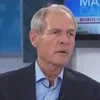 John Zechner
It's surprised him how badly they've both acted. Again, it seems the fear is that AI is somehow going to displace what they do -- that's not realistic when you look at their core businesses. He's been adding to both names recently.
John Zechner
He's been adding recently. Recent deal is mostly a share exchange with EQX. Both stocks have come down with the falloff in gold. He likes golds generally, especially the ones that have domestic exposure. Though higher interest rates are headwinds for gold, central banks continue to buy.
John Zechner
From a value point of view, NVDA sticks out as cheaper (~22x PE) in the space. But he's been reducing his exposure to the sector. The capex isn't slowing down anytime soon. When the music stops on this, you have to be really wary. Cyclical. Very cautious on semis.

He's seen this movie before, when everyone started loving the Canadian banks and the valuations became extended. Great capital, safe, proven in market downturns. But 4x forward earnings is high. There's an argument to be made that bank earnings will be less cyclical than in the past -- loans are diversified, more fee-oriented. But we'll still see the downturn, and capital markets will cease to be a tailwind.
He's significantly underweight the banks. More of a seller. Don't buy into these valuations.




He was probably feeling defensive last year with these picks, same as he is now. Sports asset value has increased dramatically, and it'll be able to monetize that. Huge positive announced last quarter that capex would be cut dramatically, which will increase FCF.
John Zechner
%20-%20http://www.bohemiancoding.com/sketch%20--%3e%3ctitle%3ePath%205%3c/title%3e%3cdesc%3eCreated%20with%20Sketch.%3c/desc%3e%3cg%20id='Page-1'%20stroke='none'%20stroke-width='1'%20fill='none'%20fill-rule='evenodd'%20stroke-linecap='round'%20stroke-linejoin='round'%3e%3cg%20id='mobile'%20transform='translate(-353.000000,%20-32.000000)'%20stroke='%2325292B'%20stroke-width='1.5'%3e%3cg%20id='Group'%20transform='translate(321.000000,%2022.000000)'%3e%3cpath%20d='M33,11%20L36.2928932,14.2928932%20C36.6834175,14.6834175%2037.3165825,14.6834175%2037.7071068,14.2928932%20L41,11'%20id='Path-5'%3e%3c/path%3e%3c/g%3e%3c/g%3e%3c/g%3e%3c/svg%3e)

Popular Articles
Most Recent Experts

The Panic-Proof Portfolio (Stockchase Research)
Stockchase Premium
David Burrows
Barometer Capital Management

The Weekly Buzzing Stocks by Billy Kawasaki
Stockchase

Stephen Weiss, Founder, Short Hills Capital Partners
Short Hills Capital Partners

Karen Firestone, CEO, Aureus Asset Management
Aureus Asset Management
Most popular stocks on Stockchase
- Toronto-Dominion Bank (TD.TO)
- Enbridge (ENB.TO)
- BCE Inc. (BCE.TO)
- Manulife Financial (MFC.TO)
- Bank of Nova Scotia (BNS.TO)
- Apple Inc (AAPL)
- Suncor Energy Inc (SU.TO)
- Microsoft Corp (MSFT)
- Canadian Natural Rsrcs (CNQ.TO)
- Royal Bank (RY.TO)
- Telus Corp (T.TO)
- TC Energy (TRP.TO)
- Alphabet Inc (GOOG)
- Canadian National R.R. (CNR.TO)
- Crescent Point Energy Corp (CPG.TO)
- Amazon.com, Inc. (AMZN)
- Teck Resources Ltd. (B) (TECK.B.TO)
- BlackBerry (BB.TO)
- Fortis Inc. (FTS.TO)
- NVIDIA Corporation (NVDA)
- Canadian Imperial Bank of Commerce (CM.TO)
- Bank of Montreal (BMO.TO)
- Bank of America (BAC)
- Bombardier Inc (B) (BBD.B.TO)
- Algonquin Power & Utilities Corp (AQN.TO)
- Pembina Pipeline Corp (PPL.TO)
- Meta Platforms Inc (META)
- Walt Disney Co. (DIS)
- Sun Life Financial Inc (SLF.TO)
- Arc Resources Ltd (ARX.TO)