NYSE:BAC
Bank of America (BAC)
50.56
-0.52 (1.02%)
as of Oct 23, 2026, 8:00:00 pm Market Closed.
708 watching
 Financials
  Technical Analysis
 0
PAST TOP PICK
(A Top Pick Aug 15/19, Down 6%) The US banks will face tough quarters with higher loan loss provisions. But BAC is well diversified. The 3.5% dividend will be safe and will still buyback shares. It's cheap at these levels, according to book value for instance. The CEO is doing the right things in cutting costs by moving a lot more of their business onto the cloud. Headwinds are already baked into the share price.
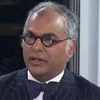 Paul Harris, CFA
Owned
banks

BUY
He has recommended it for a long time. A great franchise, with a good yield, trades at 10 times earnings and only 0.8 times book value. A very cheap buy here. They are top ranked in investment banking and wealth management. A very strong franchise and conservative capital ratios. You can buy it here. He thinks it should trade at 1.5 times book. Yield 3.2%
Paul Harris, CFAOwned
banks
PAST TOP PICK
(A Top Pick May 21/19, Down 19%) It is trading below book value. It is not a banking crisis. A lot of business comes from other areas. They stopped buybacks. They have room to increase dividends when things return to normal.
Paul Harris, CFAOwned
banks
TOP PICK
They came out as a too big to fail bank. Their reserves are going up thanks to QE. They took advantage of free money, while tightening lending.
Yield 3.06% (Analysts’ price target is $26.50)
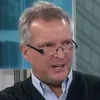 Brian Acker, CA
Owned
banks
TOP PICK
It is probably the highest quality bank in the US. Here it is EBV -3, 'at the blue'. This is a great opportunity. Insiders every day they are literally getting rid of regulations in terms of capital hits etc. Every day they strike out punitive regulations so when this is all said and done, these banks are going to be really good value. (Analysts’ price target is $32.92)
Brian Acker, CAOwned
banks
PAST TOP PICK
(A Top Pick May 21/19, Down 27%) Could take a position with fresh cash now. Trading well below book value. Lots of capital. In very good shape, and will continue to grow book value. Payout ratio in 25% range. Room to grow the dividend.
Paul Harris, CFAOwned
banks
BUY
He still likes investing in US financials. A lot of the banks have emerged from the 2008 crisis with much improved balance sheets and efficiencies. BAC-N has continued to grow deposits. They have also invested in technology to add peer-to-peer payments. They have made their own AI for customers and investors.

banks
COMMENT

BUY
Trades at 1.2x book. Great story at these levels. Can increase dividend or buy back shares. Nothing to worry about regulatory-wise, so they can grow their business nicely. (Analysts’ price target is $37.00)
Paul Harris, CFAOwned
banks

COMMENT
BAC vs. JPM Driving US banks is a strong economy and flat yield curve. Unlike last year, bank movement now will be on a valuation basis. JPM trades at a 50% premium to book value, and BAC at book value, but Citibank (which he owns) trades at 70% book value and is narrowing that gap. Citi is his choice.

banks


BUY
BAC is a little rich now, but is growing well, especially in digital banking which is very profitable. They're returning lots of capital through dividend rises. He expects the yield curve to steepen; we're pushing the envelope in fiscal stimulus.
 John O'Connell, CFA
Owned
banks
'%20fill='%23ffffff'%3e%3cg%20id='Pager'%20transform='translate(423.000000,%201755.000000)'%3e%3cpath%20d='M243.295367,17.286474%20C243.68919,16.9045087%20244.327703,16.9045087%20244.721525,17.286474%20L249,21.4361302%20L253.278475,17.286474%20C253.672297,16.9045087%20254.31081,16.9045087%20254.704633,17.286474%20C255.098456,17.6684393%20255.098456,18.2877274%20254.704633,18.6696927%20L249.35654,23.856763%20C249.159628,24.0477457%20248.840372,24.0477457%20248.64346,23.856763%20L243.295367,18.6696927%20C242.901544,18.2877274%20242.901544,17.6684393%20243.295367,17.286474%20Z'%20id='Path'%20transform='translate(249.000000,%2020.500000)%20scale(-1,%201)%20rotate(-90.000000)%20translate(-249.000000,%20-20.500000)%20'%3e%3c/path%3e%3c/g%3e%3c/g%3e%3c/g%3e%3c/svg%3e)
'%20fill='%23ffffff'%3e%3cg%20id='Pager'%20transform='translate(423.000000,%201755.000000)'%3e%3cpath%20d='M243.295367,17.286474%20C243.68919,16.9045087%20244.327703,16.9045087%20244.721525,17.286474%20L249,21.4361302%20L253.278475,17.286474%20C253.672297,16.9045087%20254.31081,16.9045087%20254.704633,17.286474%20C255.098456,17.6684393%20255.098456,18.2877274%20254.704633,18.6696927%20L249.35654,23.856763%20C249.159628,24.0477457%20248.840372,24.0477457%20248.64346,23.856763%20L243.295367,18.6696927%20C242.901544,18.2877274%20242.901544,17.6684393%20243.295367,17.286474%20Z'%20id='Path'%20transform='translate(249.000000,%2020.500000)%20rotate(-90.000000)%20translate(-249.000000,%20-20.500000)%20'%3e%3c/path%3e%3c/g%3e%3c/g%3e%3c/g%3e%3c/svg%3e)