
TSE:RY
Royal Bank (RY.TO)
51 expert ratings on Royal Bank (RY.TO) in the last 12 months: 30 Buy, 13 Hold, 8 Sell. Latest rating: PAST TOP PICK by The Panic-Proof Portfolio (Stockchase Research) on Oct 1, 2026.
 Financials
  Technical Analysis


Their return on capital over the years is in the mid-teens. Valuation matters. Banks don't meet his criteria. The returns aren't as consistently high as he likes. The primary wealth-building tool of the banks are the executive salaries and bonuses, not the appreciation of shares. RY is the leader in Canada.

Stock prices go up, they go down. Don't let the stock market dictate your research based on daily, random market performance. Look at that chart! Holy smokes! :)
The better question is why has it gone up so much? Should it trade at these valuations? Should I be taking some $$ off the table? How much of my portfolio does it now represent? Whether to trim depends on your risk tolerance and comfort level.

Is the top Canadian bank and the largest. They benefit from capital markets and wealth management activity. THey bought HSBC, so they can grow by cross-selling products. The past year the Canadian banks have done very well, but PEs are historically high. RY's dividend is below 3%, but historically rises. Banks are provisionoing less. The regulators just lowered the amount of capital banks must keep on their balance sheets, so this benefits future growth.
 Christine Poole
Cornerstone of their dividend growers portfolio. Balance of growth and income that's compelling, defensible, and sustainable through the cycles. Biggest, best, trades at slight premium to the group. Accelerated earnings growth, loan loss provisions released back into earnings. Capital markets and wealth management are second to none and booming. Reduced OSFI provisions paves the way to make more loans, buy back shares, or increase dividends.
Banking group up ~75% in past 12 months, unlikely to repeat in the coming 12 months. But that doesn't augur an immediate pullback. Valuations are breaking paradigms.
 Brian Madden
She wouldn't be overweight at this level, as banks are ultimately a leveraged bet on the health of the economy. Good news is that earnings have held up much better than many expected. She's still watching credit losses. Has the broadest mix of Canadian banking, leader in wealth management and capital markets. Keep holding a balanced position.
 Brianne Gardner
Premier Canadian bank, and it trades at that kind of valuation. BNS has had some issues. Change in management, change in focus. Cheapest of the banks on a PE basis.
It all depends on how long you're looking to own for. Even if you've made gains, hold on to what you have. He's sticking with RY.
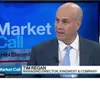 Tim Regan
Many who have held this for a while face the problem of taking the capital gain and turning it income for the rest of their lives. Selling RY pays a 2.39% dividend could work if it's in a registered tax so you don't have to pay that tax immediately. The stock market looks toppy, so you can take some profits and transfer that in a high-yield security to generate income.

The banks are very well positioned. Benefitting from GenAI and AI investments. Regulatory environment is in their favour with OSFI lowering threshold for risk-weighted assets, which means they have more capital to lend. Consumer is reasonably healthy. As long as interest rates don't go flying through the roof anytime soon, the banks can continue to do well.
 Andrew Pink
Same business it was a year ago. Capital markets and asset management doing well, retail doing OK. But it's up ~70% in 12 months or so. Trading close to 3x book value, 10-year average is 2x. A bit excessive. He's been trimming Canadian banks. Still the best-quality bank in Canada.
 Martin Cobb, ASIP
;fill-opacity:1;'/%3e%3cpath%20d='M31%2018.6001V30H8V18.6001L14.1334%2022.4334L19.4999%2014L24.8669%2022.4334L31%2018.6001Z'%20fill='%23EE5432'%20style='fill:%23EE5432;fill:color(display-p3%200.9340%200.3310%200.1956);fill-opacity:1;'/%3e%3c/svg%3e) Premium content
Premium contentWe again reiterate RY as a TOP PICK. As Canada was announced as a founding member of the NATO financial consortium, Canadian banks are well positioned to expand its financing network. It trades at 19x earnings, 3.1x book and supports a 17% ROE. We continue to recommend a stop at $276, looking to achieve $343 -- upside potential of 16%. Yield 2.4%
(Analysts’ price target is $310.00)Premium contentCapital markets and wealth management businesses have driven the Canadian banks. They've benefited a lot as the stock market rises. THe underlying retail banking business is sluggish, but there's optimism here, because next year mortgage renewals will no longer be a headwind to the Canadian economy. The banks have endured with minimal loan losses. The PE of the Canadian banks is historically high, but they remain great options to own.
'%20fill='%23ffffff'%3e%3cg%20id='Pager'%20transform='translate(423.000000,%201755.000000)'%3e%3cpath%20d='M243.295367,17.286474%20C243.68919,16.9045087%20244.327703,16.9045087%20244.721525,17.286474%20L249,21.4361302%20L253.278475,17.286474%20C253.672297,16.9045087%20254.31081,16.9045087%20254.704633,17.286474%20C255.098456,17.6684393%20255.098456,18.2877274%20254.704633,18.6696927%20L249.35654,23.856763%20C249.159628,24.0477457%20248.840372,24.0477457%20248.64346,23.856763%20L243.295367,18.6696927%20C242.901544,18.2877274%20242.901544,17.6684393%20243.295367,17.286474%20Z'%20id='Path'%20transform='translate(249.000000,%2020.500000)%20rotate(-90.000000)%20translate(-249.000000,%20-20.500000)%20'%3e%3c/path%3e%3c/g%3e%3c/g%3e%3c/g%3e%3c/svg%3e)

Popular Articles




Royal Bank (RY.TO) Frequently Asked Questions
What is Royal Bank stock symbol?
Royal Bank is a Canadian stock, trading under the symbol RY.TO (previously RY-T on Stockchase) on the Toronto Stock Exchange (RY-CT). It is usually referred to as TSX:RY or RY.TO
Is Royal Bank a buy or a sell?
51 expert ratings on Royal Bank (RY.TO) in the last 12 months: 30 Buy, 13 Hold, 8 Sell. Latest rating: PAST TOP PICK by The Panic-Proof Portfolio (Stockchase Research) on Oct 1, 2026. Read the latest stock experts' ratings for Royal Bank.
Is Royal Bank a good investment or a top pick?
Royal Bank was recommended as a Top Pick by The Panic-Proof Portfolio (Stockchase Research) on 2026-10-01. Read the latest stock experts ratings for Royal Bank.
Why is Royal Bank stock dropping?
Earnings reports or recent company news can cause the stock price to drop. Read stock experts' recommendations for Royal Bank.
Is Royal Bank worth watching?
Royal Bank is followed by 1478 investors on Stockchase and is a trending stock that is worth watching.
What is Royal Bank stock price?
On 2026-10-21, Royal Bank (RY.TO) stock closed at a price of $283.62.
'%20fill='%23FFB800'%3e%3cg%20id='filled-.-button'%20transform='translate(120.000000,%20413.999972)'%3e%3cpath%20d='M101.499729,2.82302245e-05%20C102.285413,-0.00432461793%20103.254164,0.496634241%20103.645655,1.25173399%20L103.712109,1.39623206%20L105.747863,6.45331817%20L111.028779,6.80428588%20C111.60867,6.84282525%20112.147242,7.1236355%20112.517275,7.58038413%20C113.223405,8.45199453%20113.142035,9.72214747%20112.357105,10.4940033%20L112.234099,10.6059323%20L108.072656,14.10894%20L109.356339,19.592529%20C109.472157,20.0872738%20109.394126,20.6085551%20109.13883,21.0455786%20C108.624329,21.9263208%20107.536956,22.2447485%20106.649713,21.8010736%20L106.511398,21.7246573%20L101.5,18.7715858%20L96.4886024,21.7246573%20C95.5790916,22.2767096%2094.4027498,21.9726757%2093.8611695,21.0455786%20C93.6058745,20.6085551%2093.5278433,20.0872738%2093.6436608,19.592529%20L94.9273443,14.10894%20L90.7659013,10.6059323%20C89.8680707,9.85015912%2089.7412886,8.49557505%2090.4827254,7.58038413%20C90.8527577,7.1236355%2091.39133,6.84282525%2091.9712215,6.80428588%20L97.2521374,6.45331817%20L99.2878908,1.39623206%20C99.6240254,0.561228427%20100.665516,-0.00460395016%20101.499729,2.82302245e-05%20Z'%20id='top-picks-.-icon-copy-7'%3e%3c/path%3e%3c/g%3e%3c/g%3e%3c/g%3e%3c/svg%3e)
'%3e%3cg%20id='filled-.-button'%20transform='translate(120.000000,%20413.999944)'%3e%3cg%20id='Group-8'%20transform='translate(90.000000,%200.000000)'%3e%3cpath%20d='M11.4997292,5.58581788e-05%20C12.2854126,-0.00429698998%2013.2541635,0.496661868%2013.6456551,1.25176162%20L13.7121092,1.39625969%20L15.7478626,6.4533458%20L21.0287785,6.8043135%20C21.60867,6.84285288%2022.1472423,7.12366313%2022.5172746,7.58041175%20C23.2234049,8.45202216%2023.142035,9.7221751%2022.3571045,10.4940309%20L22.2340987,10.60596%20L18.0726557,14.1089676%20L19.3563392,19.5925566%20C19.4721567,20.0873014%2019.3941255,20.6085828%2019.1388305,21.0456062%20C18.6243292,21.9263484%2017.5369557,22.2447761%2016.6497127,21.8011012%20L16.5113976,21.7246849%20L11.5,18.7716134%20L6.48860242,21.7246849%20C5.5790916,22.2767372%204.40274983,21.9727033%203.86116953,21.0456062%20C3.60587449,20.6085828%203.52784326,20.0873014%203.64366079,19.5925566%20L4.9273443,14.1089676%20L0.76590125,10.60596%20C-0.13192926,9.85018675%20-0.258711404,8.49560268%200.482725407,7.58041175%20C0.85275775,7.12366313%201.39132997,6.84285288%201.97122149,6.8043135%20L7.25213737,6.4533458%20L9.28789079,1.39625969%20C9.62402537,0.561256055%2010.6655161,-0.00457632221%2011.4997292,5.58581788e-05%20Z'%20id='top-picks-.-icon-copy-7'%20fill='%23FFB800'%3e%3c/path%3e%3cpath%20d='M11.4997292,2.77818228e-05%20C12.2854126,-0.00429698998%2013.2541635,0.496661868%2013.6456551,1.25176162%20L13.7121092,1.39625969%20L15.7478626,6.4533458%20L21.0287785,6.8043135%20C21.60867,6.84285288%2022.1472423,7.12366313%2022.5172746,7.58041175%20C23.2234049,8.45202216%2023.142035,9.7221751%2022.3571045,10.4940309%20L22.2340987,10.60596%20L18.0726557,14.1089676%20L19.3563392,19.5925566%20C19.4721567,20.0873014%2019.3941255,20.6085828%2019.1388305,21.0456062%20C18.6243292,21.9263484%2017.5369557,22.2447761%2016.6497127,21.8011012%20L16.5113976,21.7246849%20L11.5,18.7716134%20C11.4998195,6.25722299%2011.4997292,2.77818228e-05%2011.4997292,2.77818228e-05%20Z'%20id='top-picks-.-icon-copy-8'%20fill='%23EAEAEA'%3e%3c/path%3e%3c/g%3e%3c/g%3e%3c/g%3e%3c/g%3e%3c/svg%3e)
'%20fill='%23EAEAEA'%3e%3cg%20id='filled-.-button'%20transform='translate(120.000000,%20413.999972)'%3e%3cpath%20d='M131.499729,2.82302245e-05%20C132.285413,-0.00432461793%20133.254164,0.496634241%20133.645655,1.25173399%20L133.712109,1.39623206%20L135.747863,6.45331817%20L141.028779,6.80428588%20C141.60867,6.84282525%20142.147242,7.1236355%20142.517275,7.58038413%20C143.223405,8.45199453%20143.142035,9.72214747%20142.357105,10.4940033%20L142.234099,10.6059323%20L138.072656,14.10894%20L139.356339,19.592529%20C139.472157,20.0872738%20139.394126,20.6085551%20139.13883,21.0455786%20C138.624329,21.9263208%20137.536956,22.2447485%20136.649713,21.8010736%20L136.511398,21.7246573%20L131.5,18.7715858%20L126.488602,21.7246573%20C125.579092,22.2767096%20124.40275,21.9726757%20123.86117,21.0455786%20C123.605874,20.6085551%20123.527843,20.0872738%20123.643661,19.592529%20L124.927344,14.10894%20L120.765901,10.6059323%20C119.868071,9.85015912%20119.741289,8.49557505%20120.482725,7.58038413%20C120.852758,7.1236355%20121.39133,6.84282525%20121.971221,6.80428588%20L127.252137,6.45331817%20L129.287891,1.39623206%20C129.624025,0.561228427%20130.665516,-0.00460395016%20131.499729,2.82302245e-05%20Z'%20id='top-picks-.-icon-copy-8'%3e%3c/path%3e%3c/g%3e%3c/g%3e%3c/g%3e%3c/svg%3e)
Our PAST TOP PICK with RY has triggered its stop at $276. To remain disciplined, we recommend covering the position at this time. This will result in a net investment gain of 5%, when combined with our previous guidance.