Halloween Sale
50% off Premium Yearly
A Comment -- General Comments From an Expert (A Commentary)
Market. Shift in politics moving to the right. We are seeing some barriers. Green economy has grown tremendously and moved toward the mainstream. Interesting to watch Trump with coal, and Doug Ford moving backwards on green energy projects. This is a short-term slowdown. Long-term, tremendous investment opportunities.
 Tim Nash
Big companies moving to clean energy. Car industry is going full steam ahead. Every major car company is moving on hybrid vehicles, and this is a major change. Easy to get caught up in short-term political cycles. Right now, he’s looking for opportunities that are a little undervalued. Long term, no question that this is the direction the economy’s going. Not a question of if the economy will change, but how quickly it will. Tread carefully for now, over next election cycle. Emerging markets like China and India are investing in green energy. Bit of a lost opportunity for Canada. We had been at the forefront, but now we’re taking three steps backward.
Tim NashCan wind power be a profitable part of your portfolio? Absolutely. Renewable energy is a play on long-term contracts. Costs are coming down dramatically. Though in Ontario, there won’t be any new contracts. Tremendous opportunity, becoming competitive with traditional systems. Look to improving energy storage to capture wind when it blows at off-peak times.
Tim NashCarbon bubble a risk to Canadian investors? If you accept climate change, are we going to be able to burn all carbon sitting in reserve? Risk that these assets will be stranded, either by government regulation or by economics. Carbon bubble of about 20 trillion dollars. Proven reserves of about 27 trillion dollars. Lower demand or higher price may make us want to keep reserves in the ground. If it happens all at once, investors will get burned. Lot of oil, gas, materials, mining on the TSX, plus banks have a lot of exposure here. Won’t happen in next 2 years. But horizon of 20, 30, 40 years will see a serious writedown of carbon assets on these publicly traded companies.
Tim NashMarket. He is happy to emphasize Canadian Equities. There can always be a plunge in the markets but if you look at the US the earnings grew into the level of the market. But the high tech companies trade at very high multiples and skew the average. The value part of the market is fairly valued. The economy probably has another 18-24 months in it and that should help the markets. Tariffs do not change his strategy but he does not know what the outcome will be from the trade wars. There is global liquidity being taken out of the system. It should make security selection much more important in the upcoming years.
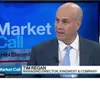 Tim Regan
Market. He thinks the market breadth has been slowly expanding since March. There has been no major correction that has occurred while market breadth was expanding. The ValueLine 1700 stock index has hit an all-time high, telling you it is not just a handful of tech stocks leading the market higher. He thinks the market is just starting the next bullish market surge. There are more people short the S&P500 than in 2015. Normally, markets reverse when everyone is “hanging out over their skis” – we are not there yet. He holds 80% of their assets in the US and have been reducing their exposure in Canada due to the current investment horizon.
 David Burrows
Technicals and trading. On technical charts he never will make a decision against what the technical chart is saying. He likes to invest in leadership sectors, like inflation based stocks now. He then will look at 150 day moving averages, and would not sell when the price was well below the moving average and he would not buy when the price was well above the average. He likes Point and Figure charts to scan for higher highs and higher lows.
David BurrowsWhere are oil prices going? He thinks oil prices are near the lower end of the trading range and more likely to go higher. He would own the best companies in the group as this is a cyclical sector, but not make it a major holding in his portfolio.
David BurrowsShould I sell my negative holdings as the market is trading a record highs? This requires the leap that you are moving on to a better place. Would I be a buyer of these holdings today? If not, then take at least or half or more off the table and watch how things progress. If they are not in the sunshine, be careful. You want to own things participating now. There are many months of higher stock prices yet to come.
David BurrowsThe worry for the market is that it will get Trumped. There's been so much talk, but the market absorbs the news about him and keeps coming back. If this earnings season goes well, we will have higher markets. Congress has allowed Trump to take control of trade and tariffs, but he'd be surprised if there isn't sympathy for Canada in places like Ohio because of our existing trading relationships. He hopes Trump is all bluster and is using all these threats to bargain, then eventually backs off. Saner heads will prevail, he hopes. Abroad, China has had an economic miracle over the past few decades and growth has far outpaced that of the U.S. and India (which has been growing rapidly in the past five years). Maybe Americans feels it's now or never to balance trade between them and China. Meanwhile, India recently has been outpacing China.

Helsinki Summit: Whatever effects on markets from this Putin-Trump meeting will diminish and won't last. Generally, politicians take credit for the direction of economies, but company earnings really drive markets. Earnings are the best we've seen in seven years with 20% YOY growth. All positive. The TSX is up only 2% YTD and he believes we can do better before the end of 2018. The Canadian market has long lagged the U.S. market. We are a late-cycle economy and are focussed on commodities. The current oil price drop is temporary.

Overview. He thinks the fair value of the S&P 500 is about 3800, which is 30% higher than today’s level. He thinks fundamentals are great, especially in the US, which is where most of his focus is. He thinks US government policy (and the associated parts of the Twitterverse) is holding the market down. The S&P hit a high in early February, went through a long consolidation, and has risen back to almost the level it held at its high. He thinks S&P will easily reach that this summer. Beyond that, though, the S&P is running out of time. China is slowing down, world growth is slowing down, and commodities stocks in Canada ex oil are not doing well. Many are down 50%, which also suggests weakness in global growth. He expects a recession in the next year or 18 months. In the recent past, the FAANG stocks have pushed the S&P higher. Netflix stumbled but it looks as though Amazon, Google and Facebook are hitting new highs. The financials are acting well. For S&P to rise 30%, the lead will have to come from the financials not the FAANGs.
 Brian Acker, CA
'%20fill='%23ffffff'%3e%3cg%20id='Pager'%20transform='translate(423.000000,%201755.000000)'%3e%3cpath%20d='M243.295367,17.286474%20C243.68919,16.9045087%20244.327703,16.9045087%20244.721525,17.286474%20L249,21.4361302%20L253.278475,17.286474%20C253.672297,16.9045087%20254.31081,16.9045087%20254.704633,17.286474%20C255.098456,17.6684393%20255.098456,18.2877274%20254.704633,18.6696927%20L249.35654,23.856763%20C249.159628,24.0477457%20248.840372,24.0477457%20248.64346,23.856763%20L243.295367,18.6696927%20C242.901544,18.2877274%20242.901544,17.6684393%20243.295367,17.286474%20Z'%20id='Path'%20transform='translate(249.000000,%2020.500000)%20scale(-1,%201)%20rotate(-90.000000)%20translate(-249.000000,%20-20.500000)%20'%3e%3c/path%3e%3c/g%3e%3c/g%3e%3c/g%3e%3c/svg%3e)
'%20fill='%23ffffff'%3e%3cg%20id='Pager'%20transform='translate(423.000000,%201755.000000)'%3e%3cpath%20d='M243.295367,17.286474%20C243.68919,16.9045087%20244.327703,16.9045087%20244.721525,17.286474%20L249,21.4361302%20L253.278475,17.286474%20C253.672297,16.9045087%20254.31081,16.9045087%20254.704633,17.286474%20C255.098456,17.6684393%20255.098456,18.2877274%20254.704633,18.6696927%20L249.35654,23.856763%20C249.159628,24.0477457%20248.840372,24.0477457%20248.64346,23.856763%20L243.295367,18.6696927%20C242.901544,18.2877274%20242.901544,17.6684393%20243.295367,17.286474%20Z'%20id='Path'%20transform='translate(249.000000,%2020.500000)%20rotate(-90.000000)%20translate(-249.000000,%20-20.500000)%20'%3e%3c/path%3e%3c/g%3e%3c/g%3e%3c/g%3e%3c/svg%3e)