A Comment -- General Comments From an Expert (A Commentary)

Gold? Which company? He is not in gold, but believes that until he sees the whites of the eyes of inflation, we are not going to see it. We are building an environment of higher oil prices, fiscal stimulation, bank regulation, etc. which are bound to create more inflation if they are carried through. If inflation starts to show up, then he’ll have a hard look at gold again.
Market. What Trump plans to do is to reverse course from what has been going on for the past 8 years, and take away the emphasis on monetary policy and low interest rates, and move over to fiscal policy. There are 4 things coming along. 1.) Tax cuts, which can be fairly quick, and would be a nice boost for corporate profits. 2.) Up to $5 trillion of infrastructure spending, designed for all those people who have lost their jobs. 3.) Potential changes to the Dodd-Frank act for the banks. 4.) A major repatriation of all of the overseas cash that is sitting in bank accounts of many corporations. These things are quite bullish for the market. He suspects that the US$ is going higher, and gold is going lower. You put your money into the financial stocks, which are going to be huge beneficiaries.
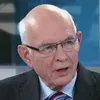 Ross Healy
Market. He had been quite cautious on bonds prior to the US election. There is still risk out there. There is going to be uncertainty as to how US policies will be implemented, and if the Trump administration is protectionist at all. So far, he seems to have moderated some of his views. Talking about tax cuts, deregulation, infrastructure spending all of which are generally very pro-growth and good for business, and ultimately good for the US economy and equities.
 Colin Stewart
Marijuana stocks? He wouldn’t invest in any marijuana stocks. If you have made some money, he would suggest you take some profit. A lot of these companies are growing quickly and could become much bigger, but looking at the valuations and market capitalizations that are being placed on these companies, it is reminiscent of the tech boom back in 1999 and 2000.
Will the growth in a dividend stock negate any negativity from a rising interest rate? In the short term, there is a risk that you get a rotation impacting companies, but if you have a company where the dividend can consistently increase, investors are generally willing to pay for that. If you have a long-term view and you like dividend stocks, these types of companies are not a bad place to be.
Colin StewartCanadian Banks. These have been good long term stocks to own, but in general, US banks are more attractive. They’ve been depressed and valuation multiples have been about the same as Canadian banks. However, the environment is going to be better as far as rising rates for better net interest margins. The US housing market has recovered, but still has room to grow, whereas the Canadian housing market has concern that it is at a peak and is leveling off.
Market. The ground has shifted since Donald Trump’s election. He has come in with a view of lower taxes, “Making America Great Again” and interest rates have gone up 75 basis points in the last 3 weeks. Thinks we are in a decisive turn on bond yields. It is possibly the thirty-year turn. Yields have got ridiculously low. Commodities now have bids that we have been waiting decades to see.
 Lyle Stein
Convert Cdn$ to US$ or buy Cdn stocks that have a lot of US exposure? He buys US stocks for areas in the marketplace that we don’t have in Canada. In the next 12 months, he believes the US will outperform Canada by quite a bit. More importantly, US interest rates are prone to rise faster. Owning Canadian companies with US operations gives you a secondary effect.
Lyle SteinMarket. He sees the market move as a secular one. It took years to develop, and it will take years to unwind. Although November was a catalyst that allowed for the acceleration of the process, it really started earlier than that. The 10-year treasury bottomed in July at about 135, and is now about 1% higher. Interest rates had generally started to move, and some of the related industries reacted to that. Anyone looking at what has happened over the last couple of weeks, might be thinking it is too late and that they can’t get into this rotation, should think again. He thinks it will go on for some time. Over time the reflation trade moves that we have seen will continue, and will reward the types of companies we have seen over the last couple of weeks. About 95% of his clients have a balanced portfolio, and in the fixed income portion, he has been very short on the curve. That has allowed him to come out of this with a very short duration of around 2 years. Currently he is about 50% overweight in the financials.
 Gordon Reid
US Market. Post the election, risk assets have rallied hard, and stocks are up 3%. Small-cap stocks are up 11%. The safe assets, US treasuries and gold, have sold off hard. Thinks that both asset classes have moved too hard and too fast in the short term. However, clients should still continue to be overweight equities relative to bonds, and to be fully invested as you are not earning anything in cash these days.
 John Petrides
US pipelines? In 2014, investors sentiment for the US pipelines (The Master Limited Partnerships) was at an all-time high. Valuations were really high. 2 things happened. The price of oil started to collapse which put a lot of pressure on revenue, and 2) the perception that the Fed would raise interest rates put pressure on the stocks, that historically return all cash to shareholders in the form of dividends. Also, they are very capital intensive and thrive under an interest rate environment. Those were 2 major headwinds. Feels the interest rate risk is still in your face. It all depends on the pace that the Fed will raise rates. The worst is probably over. The bigger issue is their tax ramifications so be careful if they are in your taxable account, as you have to file a K-1. Also, if it is in your IRA, you have to generate a certain amount of income. The worst is probably behind you now.
Market. Expectations were very low on Donald Trump, and when people came to realize that there were a lot of different things he could do, that really helped the stock market. Some of the issues he talked about was bringing taxes down, allowing US companies to bring home money sitting overseas, individual taxes, corporate taxes, reducing bank regulations, and changing Obama care is much as he could. What happens in the US really resonates around the rest of the world. There is a lot of push to increase fiscal stimulus.
 Paul Harris, CFA
OPEC. There’s going to be a deal, but the deal is going to be to freeze production, not cut production. The history of OPEC is that they always cheat, and there is basically no chance in his mind, that even if they agree to a ceiling at 33 million barrels, that they adhere to it. It is all about demand, so is global demand in a slowing world going to increase? OECD has said that the world is going to grow a little bit better because we are no longer austerity driven, but we are driven by spending. The GDP formula is GDP=C+1+G(X-M). When the government borrows and spends like they expect to on infrastructure, mathematically GDP is going to go up, but here’s the thing with the consumer (C). His average client is probably around 60 years old, and their financial plan indicates their money is going to last 30 to 35 years. It doesn’t matter how low interest rates get or how much the government is going to spend, aggregate demand (G) is not going up, as people are living longer. This demographic headwind that we are facing is going to be really toxic for growth for the next decade and decades to come. Increasing government spending is only going to add on to the debt. That is another massive headwind. We have some very difficult economic challenges going forward.
 Larry Berman CFA, CMT, CTA
'%20fill='%23ffffff'%3e%3cg%20id='Pager'%20transform='translate(423.000000,%201755.000000)'%3e%3cpath%20d='M243.295367,17.286474%20C243.68919,16.9045087%20244.327703,16.9045087%20244.721525,17.286474%20L249,21.4361302%20L253.278475,17.286474%20C253.672297,16.9045087%20254.31081,16.9045087%20254.704633,17.286474%20C255.098456,17.6684393%20255.098456,18.2877274%20254.704633,18.6696927%20L249.35654,23.856763%20C249.159628,24.0477457%20248.840372,24.0477457%20248.64346,23.856763%20L243.295367,18.6696927%20C242.901544,18.2877274%20242.901544,17.6684393%20243.295367,17.286474%20Z'%20id='Path'%20transform='translate(249.000000,%2020.500000)%20scale(-1,%201)%20rotate(-90.000000)%20translate(-249.000000,%20-20.500000)%20'%3e%3c/path%3e%3c/g%3e%3c/g%3e%3c/g%3e%3c/svg%3e)
'%20fill='%23ffffff'%3e%3cg%20id='Pager'%20transform='translate(423.000000,%201755.000000)'%3e%3cpath%20d='M243.295367,17.286474%20C243.68919,16.9045087%20244.327703,16.9045087%20244.721525,17.286474%20L249,21.4361302%20L253.278475,17.286474%20C253.672297,16.9045087%20254.31081,16.9045087%20254.704633,17.286474%20C255.098456,17.6684393%20255.098456,18.2877274%20254.704633,18.6696927%20L249.35654,23.856763%20C249.159628,24.0477457%20248.840372,24.0477457%20248.64346,23.856763%20L243.295367,18.6696927%20C242.901544,18.2877274%20242.901544,17.6684393%20243.295367,17.286474%20Z'%20id='Path'%20transform='translate(249.000000,%2020.500000)%20rotate(-90.000000)%20translate(-249.000000,%20-20.500000)%20'%3e%3c/path%3e%3c/g%3e%3c/g%3e%3c/g%3e%3c/svg%3e)



Telcos, utilities or banks? Utilities haven’t been acting that well, nor has BCE. This a buying opportunity. He would be on the sidelines with utilities as they are more sensitive. Yields tend to be lower than the telecoms. Wait until after December 15 when he believes there will be a rate increase. With the bond market selling off and bond yields coming back, and not yielding as much as banks or telecoms, the utilities are still vulnerable. He would stand back and wait for the next 6-9 months to see what happens. (See Top Picks.)