Halloween Sale
50% off Premium Yearly
A Comment -- General Comments From an Expert (A Commentary)
Deflationary environment. He does not feel we are headed here. He sees unemployment going down, globally, and wages trickling up.
 Mark Grammer
US Fed Monetary Policy. There is concern we might be heading to an inverted yield curve (indicating we are headed for a recession). We are not yet seeing that. The bond market is projecting the growth rate is not as robust as the Fed feels. He would be very surprised if we did not get two more rate rises this year, but they would not impact the 2 and 10 year yields. We need to get interest rates normalized.
Mark GrammerMarket. The US markets are overvalued, meaning that return expectations should be lower. Earnings were at roughly 115 last year, and are projected at about 132 this year, so we are looking at 18-18.5 on a multiple basis. Other areas are looking more attractive than the US market. People should be looking at Japan and particularly Europe. Europe has had quite a few months now of positive economic surprises. ETF’s would be a good entry for most investors.
 Lorne Zeiler
A stock or ETF for European exposure? If making an entry into a market where you have never been before, an ETF is a good way to do it. You get good diversification across countries and across sectors. Everyone assumes Canadian ETFs are all cheap and are all going to give diversification. That is not necessarily so. He’s been buying into Europe through a US listed ETF. (See Top Picks.)
Lorne ZeilerMarket. Since last February, we have been in a very productive equity market. We are having a little pause right now which he doesn’t think will take very long. There has been a great focus on passive, low fee investing and being an index investor, at precisely the moment when correlations, or the degree to when stocks and sectors behave the same, is at its lowest level in 15 years. The opportunity to target specific themes and companies is really an outsized opportunity right now, and he hopes people will be able to take advantage of it. From 1966 to 1982, the market travelled sideways in a series of advances and declines. The late 70s was when Vanguard got its start in Index investing. That was the last time managers had been stupid for the previous 15 years. The S&P 500 from 2000 to 2013 travelled sideways in a series of advances and declines, and many managers had a hard time beating it. The topic now is index investing/passive investing, but that is looking backwards. Today, we have very strong clear themes in this market, and the opportunity to target and be an active manager has not been better in 15 years. The market bottomed in 1981, and by 1985 no one was talking Index investing.
 David Burrows
Stops? He uses Stops on all positions he invests in. Half the battle is knowing when to Sell. Doesn’t use automatic Stops, but monitors a stock for when it gets close to an exit price. He uses “point and figure” price charts, which help him to recognize inflection points where behaviour is changing in the security. For a longer-term investor, they could use the 150-day moving average.
David BurrowsMarket. We are in the very constructive environment. Globally, the economy is doing very well. Germany is doing well, China is coming on, India is doing well. We are in a healthy global economy, just coming out of a 10 year, following the mortgage crisis. However, with long bonds at 2% and equity risk premiums at ranges of 4%-5%, we are seeing bond substitute companies like Coca-Cola selling at 25X earnings. Valuations are fine if interest rates don’t move. We are in a very healthy environment and thinks growth stocks are fine.
 Bruce Murray
REITs. REITs have been more stable than the broad market because of the income component. A lot of that has been aided by lower interest rates over the last 10 years. Returns for the next 10 years will not be as strong as the previous 10. There will be a little more volatility, so you want to Buy dips and Sell peaks. Focus on your yield and you will get that plus a little bit.
 Derek Warren
Market. Today’s market was definitely to the side of the downside, and Goldman Sachs was probably the big catalyst. There were pretty good results out of City, Bank of America and even Wells Fargo was okay. There were disappointing trading revenues, up only 1%, particularly in the fixed income and the commodity side. Equities wasn’t great either and that really hurt. When you look at the move in the Dow, in particular, Goldman is such a huge component in it, for 35%-40% of the move so far since the election. A huge mover. He still likes the financials and it is a good place to be, but this didn’t help.
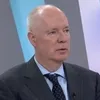 John Stephenson
Gold/Silver stocks that will have the biggest potential in the next 3-4 months? He would just stay with gold stocks. If we continue to have uncertainty and the US$ continues to be weak, then you want to be in gold. Silver will also benefit, but so much of what Silver produces is also zinc. It is very hard to get a pure play silver. He would stick with the larger caps.
Markets. North Korea is not worrying markets. Trump has shown his willingness to use aggressive force in recent weeks. The risk metrics are giving you warnings signals, but the stock market does not care. Some key trend lines are being broken globally. He would not want to put money to work right now. The French election outcome could be bad for markets. The rally is starting to break. Gold should see resistance at $1300, but $1350 would be where we struggle. He would sell in that range. China has been the biggest currency manipulator for 35 years. With Trump saying his dollar is too strong and he wants it lower it is playing the same game. For the banks, net interest margins have improved, but the capital markets side just isn’t there. The leadership sectors have rolled over. He thinks some kind of correction is coming.
 Larry Berman CFA, CMT, CTA
'%20fill='%23ffffff'%3e%3cg%20id='Pager'%20transform='translate(423.000000,%201755.000000)'%3e%3cpath%20d='M243.295367,17.286474%20C243.68919,16.9045087%20244.327703,16.9045087%20244.721525,17.286474%20L249,21.4361302%20L253.278475,17.286474%20C253.672297,16.9045087%20254.31081,16.9045087%20254.704633,17.286474%20C255.098456,17.6684393%20255.098456,18.2877274%20254.704633,18.6696927%20L249.35654,23.856763%20C249.159628,24.0477457%20248.840372,24.0477457%20248.64346,23.856763%20L243.295367,18.6696927%20C242.901544,18.2877274%20242.901544,17.6684393%20243.295367,17.286474%20Z'%20id='Path'%20transform='translate(249.000000,%2020.500000)%20scale(-1,%201)%20rotate(-90.000000)%20translate(-249.000000,%20-20.500000)%20'%3e%3c/path%3e%3c/g%3e%3c/g%3e%3c/g%3e%3c/svg%3e)
'%20fill='%23ffffff'%3e%3cg%20id='Pager'%20transform='translate(423.000000,%201755.000000)'%3e%3cpath%20d='M243.295367,17.286474%20C243.68919,16.9045087%20244.327703,16.9045087%20244.721525,17.286474%20L249,21.4361302%20L253.278475,17.286474%20C253.672297,16.9045087%20254.31081,16.9045087%20254.704633,17.286474%20C255.098456,17.6684393%20255.098456,18.2877274%20254.704633,18.6696927%20L249.35654,23.856763%20C249.159628,24.0477457%20248.840372,24.0477457%20248.64346,23.856763%20L243.295367,18.6696927%20C242.901544,18.2877274%20242.901544,17.6684393%20243.295367,17.286474%20Z'%20id='Path'%20transform='translate(249.000000,%2020.500000)%20rotate(-90.000000)%20translate(-249.000000,%20-20.500000)%20'%3e%3c/path%3e%3c/g%3e%3c/g%3e%3c/g%3e%3c/svg%3e)

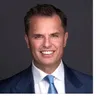

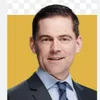
Markets. Borrowing costs are staying low for the foreseeable future because they are driven by inflation and we aren’t seeing it. Low interest rates are actually incentivizing people to save, contrary to what people would think. The rest of the world is cheaper than America. Growth rates are actually higher with multiples being lower. He looks for opportunities there. Emerging markets have been much better in the last 12 months than the last few years. With the US dollar stabling or weakening this bodes well for emerging markets. Trump tweets and speaks, but then does not act as he indicated.