Halloween Sale
50% off Premium Yearly
A Comment -- General Comments From an Expert (A Commentary)

Oil. We are in the bottoming phase of the market. The US is taking all the growth in global oil production. OPEC countries are already shipping more oil to the states. There is going to be a seasonal pull back in oil. He thinks he will be bullish on oil sometime next year. He expects a multi-year bull market starting then for 5 years or so.
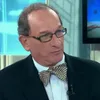 Josef Schachter
He's not rattled by current headlines. The stories in the back of the newspaper are more important than the front page. A news item is shocking at first, but people get used to that news or forget it. Also, people focus on the negative more than the positive, and the negative can be positive in the investing world, such as a collapse in oil prices doesn't trigger an economic collapse (rising oil does, actually). The bond proxies like utilities, REITs and telecoms are not attractive. Rates are rising and there's no growth in these stocks. He's also worried about the bond market and gold. Instead, buy cyclicals instead of defensives, like healthcare and technology, stocks that benefit from a strengthening economy.
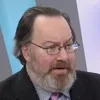
Market. In the case of 5G he wants to position himself in the companies that have the most spectrum. There is a spectrum auction coming up shortly. The incumbents will probably share 53% and the rest goes to smaller companies. Cellular is going to change all kinds of occupations in years to come. AI is more applicable to more industries than block chain. In the future you probably won't need a radiologist. The insurance companies will love this as they won't have to employ all these people. He is involved in an AI start up fund.
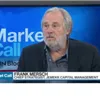 Frank Mersch
5 G Networks. This is going to be bigger than the Internet. He is not sure he completely agrees with that but with the smart cities including automated cars, we need this. It actually uses less power at the end of the day. It is 100 times faster than 4G. FB-Q and so on have basically built their companies with no infrastructure because they use the internet.
Frank MerschChoosing an equity mutual fund. It is hard to do stock picking as an individual so he would recommend a mutual fund. It is better to have it in a cash account than an RRSP. It depends on the environment and where you are in the cycle. A lot of people are managing their own portfolios these days. If you are willing to spend the time and do the research you can build a decent portfolio. We have been in a great cycle for 10 years. The world's not getting any safer or stable with Trump in power. You want to look for lower fees. The industry has shrunk in terms of companies. An ETF is a market or a part of the market and it depends on how you feel about the sector. The market is not without risk at the end of the day.
Frank MerschGrowth vs Defensive. Normally this time year, on a seasonal basis, there’s a shift from heavy cyclical stocks like base metals, industrials, financials. Staples, bonds, utilities tend to pick up in summer. And we do see this rotation, but with all the talk of inflation, still don’t see US 10-year yield much higher. Somewhat pro-cyclical tech sector ETF, XLK, should carry on into July. Industrials have come off. XLP (staples) and XLU (utilities) have started to pick up right on cue. Corporate and individual debt lag rate increases. At Castlemoore, when they look out, they’re thinking is this typical rotation or might there be something more.
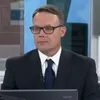 Hap (Robert) Sneddon FCSI
US tariffs on China. Might tamp down economic growth. The way the market reacted today, it’s looking past this. Markets do often reverse after a big day on the market. Market’s saying it’s just Trump being Trump, China reacting as opposed to implementing, and it will all work out. If we do get a meaningful trade war, not good for long-term global growth.
Hap (Robert) Sneddon FCSIGold. Coming into seasonal period. Bottom is being formed and there’s a little trend, which we’re seeing in many gold stocks. Gold stocks and producers track each other. Gold can stay weak, but the sector moves forward, and some stocks hit new highs. Gold has been not loved, but with strong US dollar, going to give some indigestion to emerging markets, because they have a lot of debt. Gold producers have been quite positive. Today gold was way down, but the high quality names have been acting quite well. Bodes well for the future. Producers will always lead the direction for the commodity on the downside and the upside, so we expect a bit more action as we move into July.
Hap (Robert) Sneddon FCSIBanks. Has really lightened up on the banks. If market thinks rates going marching up, but banks have stalled, does the market think the economy’s not going be able to handle higher rates for longer? Banks won’t do better until the fall.
Hap (Robert) Sneddon FCSIMarket. Valuations multiples in the US are very expensive compared to the tepid growth there. There are high debt levels and trade wars affecting them. There is a lot of uncertainty out there for companies trading at rich multiples. Marijuana stocks are indicating market tops, typically. We are in that zone so be a little more cautious at this time. There can be opportunities in Canadian stocks. Smaller and mid-sized stocks have been neglected for the last two years. ETFs require a liquid stock in their portfolio so demand for those ETFs push up those large caps. People will scramble at some point for the exits.
 Stephen Takacsy, B. Eng, MBA
Market. Have had a little more volatility in markets this year as compared to last year, but seems to be continuing on same trajectory as last year with certain sectors. A marijuana bubble, and now cryptocurrency bubble which seems to be imploding. The old economy has been left behind, especially in Canada. A very sector money flow market right now. Be patient on weak stocks that have great fundamentals. Sees opportunities when some of these bubbles blow up. Feds tightened the yield curve again and thinks there may be 4 tightenings this year, but the economy is still doing well in a low interest rate environment.
 Alex Ruus
Market. He is cautious right now, especially in Canada, where things get quite illiquid in the summer. He is holding a little more cash than normal. With the World Cup beginning this will only make things worse. This may create some short-term opportunities for buyers looking for opportunities.
 Peter Imhof
Cannabis. His group did the first major financing in the space. There are only 5 or 6 major players. The stocks have had a massive run-up, which caused them to take profit a while ago. He is now looking for opportunities to buy again. He sees the Aurora deal as a pure paper-for-paper deal and is not involved in it.
Peter Imhof'%20fill='%23ffffff'%3e%3cg%20id='Pager'%20transform='translate(423.000000,%201755.000000)'%3e%3cpath%20d='M243.295367,17.286474%20C243.68919,16.9045087%20244.327703,16.9045087%20244.721525,17.286474%20L249,21.4361302%20L253.278475,17.286474%20C253.672297,16.9045087%20254.31081,16.9045087%20254.704633,17.286474%20C255.098456,17.6684393%20255.098456,18.2877274%20254.704633,18.6696927%20L249.35654,23.856763%20C249.159628,24.0477457%20248.840372,24.0477457%20248.64346,23.856763%20L243.295367,18.6696927%20C242.901544,18.2877274%20242.901544,17.6684393%20243.295367,17.286474%20Z'%20id='Path'%20transform='translate(249.000000,%2020.500000)%20scale(-1,%201)%20rotate(-90.000000)%20translate(-249.000000,%20-20.500000)%20'%3e%3c/path%3e%3c/g%3e%3c/g%3e%3c/g%3e%3c/svg%3e)
'%20fill='%23ffffff'%3e%3cg%20id='Pager'%20transform='translate(423.000000,%201755.000000)'%3e%3cpath%20d='M243.295367,17.286474%20C243.68919,16.9045087%20244.327703,16.9045087%20244.721525,17.286474%20L249,21.4361302%20L253.278475,17.286474%20C253.672297,16.9045087%20254.31081,16.9045087%20254.704633,17.286474%20C255.098456,17.6684393%20255.098456,18.2877274%20254.704633,18.6696927%20L249.35654,23.856763%20C249.159628,24.0477457%20248.840372,24.0477457%20248.64346,23.856763%20L243.295367,18.6696927%20C242.901544,18.2877274%20242.901544,17.6684393%20243.295367,17.286474%20Z'%20id='Path'%20transform='translate(249.000000,%2020.500000)%20rotate(-90.000000)%20translate(-249.000000,%20-20.500000)%20'%3e%3c/path%3e%3c/g%3e%3c/g%3e%3c/g%3e%3c/svg%3e)


Interest Rates. He would recommend a target rate bond fund. You are diversified across corporate and other bonds.