Halloween Sale
50% off Premium Yearly
A Comment -- General Comments From an Expert (A Commentary)

Market. There has been no shortage of commentary on the G7 summit this morning. Regarding Trump's comments. Things have to get worse before they get better. It is not a good thing. But ultimately it could lead to better trade deals. It seems this is what the market is pricing in. Trump thinks he needs to come out ahead on the trade deals. Attention is now on North Korea. This could play out for years and years. The ECB actions will be more important than those of the Fed. The ECB has purchased $3.5 billion of Italian bonds in the last three years.
 Larry Berman CFA, CMT, CTA
Withholding tax if US ETFs held in an RRIF. Yes, there is a withholding tax and there is not a whole lot we can do about it. You need a W8BEN form signed and there might be some tax relief in some cases.
Larry Berman CFA, CMT, CTACanada's debt to GDP ratio. At the federal level it is around 33%. You have to add in the provincial debt. As a whole it is around 95% debt to GDP. The US is over a hundred as is Europe. Japan is far beyond that. When the level of debt is the same size as the output of the world, it is like hitting the breaks on growth. Debt globally is choking and interest rates can't go up much because debt servicing would be astronomical. We are in a 1 to 3 % growth world.
Larry Berman CFA, CMT, CTARecession in 2019/20? The yield curve is the best predictor of a recession. It is inverted within a year of the recession. The yield curve in question is the 3 year relative to the 10 year. There is a 10% or less chance of a recession next year. Equity markets peak about 8-9 months before a recession. Longer bonds should make you money as the market prices in recession risk.
Larry Berman CFA, CMT, CTAEducational Segment. Bond Supply and Unwinding Quantitative Easing. Part of the equity market anxiety earlier this year was related to volatility. Inflation pressures are still building. The Fed is unwinding the balance sheet and the ECB may announce they are doing the same thing later this week. There is a VIX for everything. He showed a chart of the VIX on 10 year bonds. It has been declining for a number of years since 2010. He thinks we will see bond volatility spike up again but not to the '08/'09 levels. It will cause anxiety in the equity markets, however. If we see equity markets weaken after 1 pm today then the supply of bonds will be a problem. The ECB is probably not going to put net new supply into the market until 2020 but the question is who is going buy the Italian bonds. He thinks it will be a big problem at some point. The markets are underplaying the risks. Corporate balance sheets everywhere are not in good shape. S&P companies have never been more leveraged compared to revenues before. There is probably going to be stresses in fixed income and equities as well, and at the same time. It is not as simple as going into a balanced fund.
Larry Berman CFA, CMT, CTAMarket. Oil. OPEC has succeeded in bringing oil inventories down and in fact at the fastest rate in history. There is going to be drama and volatility in two sources considering increasing production. Most production growth in North America takes 4 to 6 years. We have seen the biggest contraction in history in the spending on new long term projects. Spending will stagnate until 2023. He feels oil prices will fall until then. Oil inventories are going to reach an all time low in Oct 2020. He feels inventories will fall below what refineries need to function. We need demand to fall and will do that through high oil prices. At today's GDP levels we would need $120 oil to get demand destruction. He seems $80 oil in 2020 months.
 Eric Nuttall
Pressure pumping is one of the more cyclical parts of the market. He thinks the stocks are oversold but does not see a catalyst for them.
Eric NuttallThe G7 tumult: Trump is aggressively challenging the established liberalization of trade and system of multilateral trade. In the UK and EU there are changes too, all creating a lot of uncertainty for investors. That said, he believes investors are looking past Trump's bluster and looking at the real dealmaking instead. Canada may still get pushed into a bad deal -- or no deal -- on NAFTA. The stakes are higher in Asia for Trump: solving North Korea military tensions and trade with China. He believes North American trade will get settled.
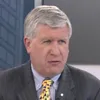
Cannabis stocks: He's made some money here, but he's traded them, not buy-and-hold, because of their enormous volatility. The law will get passed, but there'll be another vote in the Senate. He expects it to pass in September or October. The big question remains, How much demand will there be? Nobody knows. He doesn't. If demand is huge, companies will grow into their multiples. But there could be a one-time lift in demand then fall off and that'll pressure stocks. We're in a consolidation phase, so the smaller producers are more attractive than the big guys who will buy them. Look for a low-cost producer or a company with an edge like Organigram whose weed is not grown in greenhouses which makes them more interesting in terms of quality control.
Market. Overall he thinks the market is in the “late-innings” of the game, suggesting risk is rising, but you can still be bullish. Oil is higher and inflation are not out of control. Interest rates can still come up modestly without hurting the market. You have to be careful, the market is near the top of the cycle and as things start to break down, you have to have the discipline to step away. In the emerging market sector, it is starting to run out of steam as Turkey, Venezuela and others are becoming a mess. Thailand and India still look good.
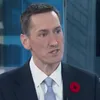 Cameron Hurst
US economy. Third longest expansion in US history of 108 months or so. Slow, sluggish expansion with GDP growth around 2-2.5%. Going forward, she looks at sentiment, manufacturing and services activity. No signs of a recession in next 12 months. Thinks we still have another year or two of runway, though you still have to monitor. Most importantly, consumer spending is very healthy. Consumer spending accounts for 7% of US GDP, unemployment is low at 3.8%, they’ve de-levered, and house prices have gone up. Canada household debt is much higher than US. Canada’s 5.8% unemployment is historically low, but our household debt levels are higher. Rates are creeping up, which will impact those debt levels.

Equities. Still likes equities, despite volatility. S&P 500 still 3% off highs in January. US companies have increased both bottom line and topline growth, and tax reform was another catalyst to add to earnings growth. Tax reform hopefully will encourage capital spending, providing more widespread economic activity.
'%20fill='%23ffffff'%3e%3cg%20id='Pager'%20transform='translate(423.000000,%201755.000000)'%3e%3cpath%20d='M243.295367,17.286474%20C243.68919,16.9045087%20244.327703,16.9045087%20244.721525,17.286474%20L249,21.4361302%20L253.278475,17.286474%20C253.672297,16.9045087%20254.31081,16.9045087%20254.704633,17.286474%20C255.098456,17.6684393%20255.098456,18.2877274%20254.704633,18.6696927%20L249.35654,23.856763%20C249.159628,24.0477457%20248.840372,24.0477457%20248.64346,23.856763%20L243.295367,18.6696927%20C242.901544,18.2877274%20242.901544,17.6684393%20243.295367,17.286474%20Z'%20id='Path'%20transform='translate(249.000000,%2020.500000)%20scale(-1,%201)%20rotate(-90.000000)%20translate(-249.000000,%20-20.500000)%20'%3e%3c/path%3e%3c/g%3e%3c/g%3e%3c/g%3e%3c/svg%3e)
'%20fill='%23ffffff'%3e%3cg%20id='Pager'%20transform='translate(423.000000,%201755.000000)'%3e%3cpath%20d='M243.295367,17.286474%20C243.68919,16.9045087%20244.327703,16.9045087%20244.721525,17.286474%20L249,21.4361302%20L253.278475,17.286474%20C253.672297,16.9045087%20254.31081,16.9045087%20254.704633,17.286474%20C255.098456,17.6684393%20255.098456,18.2877274%20254.704633,18.6696927%20L249.35654,23.856763%20C249.159628,24.0477457%20248.840372,24.0477457%20248.64346,23.856763%20L243.295367,18.6696927%20C242.901544,18.2877274%20242.901544,17.6684393%20243.295367,17.286474%20Z'%20id='Path'%20transform='translate(249.000000,%2020.500000)%20rotate(-90.000000)%20translate(-249.000000,%20-20.500000)%20'%3e%3c/path%3e%3c/g%3e%3c/g%3e%3c/g%3e%3c/svg%3e)



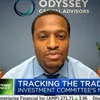

Greenhouses moving from vegetables to pot? He does not think it is a genuine concern. You still have to get a regulatory license. He thinks the black market will oversupply the Canadian market and people won't switch from vegetables to pot.