A Comment -- General Comments From an Expert (A Commentary)
Is there any way of knowing the “face value” of target bond ETF’s Maturity? These are products offered by Bank of Montréal (BMO-T). There is usually a set date that they are going to mature. The short answer to the question is that “No, there is no face value”. You are getting a basket of bonds so it is a total return type of product with a mix of bond interest and the fluctuation of the daily market value.
 Randy LeClair
What are odds on a sell-off in bonds? What’s the trade and where would the money go? We are getting a little bit later in the cycle. When we get to that point of interest rates going higher, bond managers are always watching economic indicators as to when that might happen and they start moving from corporate to more government.
Randy LeClairMarkets. He is still positive on the market based on his belief that 1) the economies’ of US and Japan in particular are going to do better than most people expect and China is going to do okay. Europe is the problem but later in the year he sees things starting to bottom and hopefully improve. 2) Thinks that bond interest rates are going up and once people realize the types of hits they are going to take on their bond holdings, money will be flowing out of there and into equities.
 Norman Levine
Lifecos? His preference is Sun Life (SLF-T), which he owns. Great West (GWO-T) is also a fabulous company and he owns this through Power Financial (PWF-T). Sold Manulife (MFC-T).
Norman LevineMarkets. Dow on a 10-day winning streak. There is sensitivity so something could trigger a pull back because we have had a strong rally since November. Markets are more focused on Bernanke’s comments that interest rates will remain low. The US is slowly getting better and China is slowly turning around. Europe’s weakness is already built in. There are always names that will pullback in this market and many times she sees it as a short term event and that is the company to buy. If there is a pullback it will not be that deep.
 Christine Poole
Markets. US markets are somewhat overbought and have had a tremendous run year to date. A little bit of caution is warranted at this point but over the course of 2013, he feels the economy is going from one fuelled by liquidity to one fuelled by growth so stock markets can do quite well going forward. Has been overweighting US stocks for 16-17 months. September-October 2011 is when the divergence between the S&P and the TSX began. Had been a little bit concerned about the commodity space on Canadian side and felt it had come to a bit of a stall. Feels mega-caps and big caps are the place you want to be at this point. To ready himself in the event of a correction, he will rotate out of overbought areas and look for names that he still likes that have sold off a little.
 Stan Wong
Good ETF that tracks US blue-chip stocks? If you are looking for US dollars, the Diamonds (DIA) would be your “go to” name and the IA is the one that tracks the Dow Jones. In Canada you can buy the ZDJ which is a BMO Dow Jones Cdn$ which is also currency hedged. One of his favourite large caps is the iShares High Dividend Equity (HDV-N). The Canadian equivalent would be XHD.
Stan WongMarkets. Has been bullish for about 3 years but is now getting cautious because the market is getting long in the tooth. We now have a rebound bull. These bulls follow some type of a crash and this is the 2nd recovery we have had since 2002 and we are now getting near the end of a rebound bull. The rebound from 2002 took about 50 months and we are currently in the rebound from 2009 at about 46 months. He is watching the financials to see when they peak because that is usually the sign.
 Bill Carrigan
Gold. The gold chart shows the mid-summer low and the current low which is at the same level, i.e. it has held. Technically the chart shows a descending triangle but that is due to the rally in the US dollar. Gold charts in most other currencies would show more of a symmetrical triangle. Gold is going to find support at its current level and that should get the gold stocks going. (See Top Picks.)
Bill CarriganMarkets. Valuations are at very reasonable levels. Although markets have hit all-time highs, corporate performance world in terms of earnings, revenues and cash flows, hit all-time highs some time ago. They are probably 20%-25% higher in terms of earnings than when we hit these levels in terms of index pricing. There is an abundance of worry out there which is always a good thing for the market. S&P 500 on a weighted basis will hit somewhere in the high 100’s, $109-$110 a share.
 Gordon Reid
Tax Implications on US Investments. There was a period during the fiscal cliff when it was thought that US holdings would be taxed right from the 1st $1. There was some relief but it does have implications for Canadians. Anyone who owns more than $60,000 of US property, including common stock, should pay attention to this. For more info check his website at e-articles and sign up for it. (www.goodreid.com)
Gordon ReidEnergy Stocks. Energy stocks in the US have performed okay but Canadian stocks are still painted with a negative brush. There is a lot of worldwide and US negative sentiment on Canada’s dirty oil from the bitumen. Thinks we have probably found the bottom here so it is time to look more positively on the Canadian energy sector. We are at the margin of starting to see a bit of a rotation into our oil stocks. Differentials were pretty wide at $35-$40 over the last 3 months but have now narrowed on the heavy oil side down to about $20. Edmonton light oil has narrowed from $10 down to almost par. This has all happened in the last couple of weeks. Hasn’t really caught on to media yet and no one is really talking about the narrowness of the differentials.
 Robert Lauzon
Short Pace Oil & Gas (PCE-T) and go Long AvenEx Energy (AVF-T) as a bet that the merger will fall apart? Guess that could be a trade. There is definitely a camp out there that is against the merger. The question is, is there another buyer for Pace as a stand-alone entity or does it get broken up? Not a trade he is putting on.
Robert LauzonMarkets. Feels that investors are shifting their focus a little bit further out the risk curve, looking for other sources of income like dividend growth. There is definitely an update for that. His big believe is to identify parts of the market that people care about or that fit the current environment. Over the last period of time, people have been willing to pay higher and higher prices for things that are predictable, where there is some catalyst leading to a positive change. For instance, the oil/gas boom in North America has not been so good for the producers but there is lots of new volume for energy infrastructure companies.
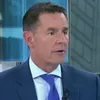 David Burrows
'%20fill='%23ffffff'%3e%3cg%20id='Pager'%20transform='translate(423.000000,%201755.000000)'%3e%3cpath%20d='M243.295367,17.286474%20C243.68919,16.9045087%20244.327703,16.9045087%20244.721525,17.286474%20L249,21.4361302%20L253.278475,17.286474%20C253.672297,16.9045087%20254.31081,16.9045087%20254.704633,17.286474%20C255.098456,17.6684393%20255.098456,18.2877274%20254.704633,18.6696927%20L249.35654,23.856763%20C249.159628,24.0477457%20248.840372,24.0477457%20248.64346,23.856763%20L243.295367,18.6696927%20C242.901544,18.2877274%20242.901544,17.6684393%20243.295367,17.286474%20Z'%20id='Path'%20transform='translate(249.000000,%2020.500000)%20scale(-1,%201)%20rotate(-90.000000)%20translate(-249.000000,%20-20.500000)%20'%3e%3c/path%3e%3c/g%3e%3c/g%3e%3c/g%3e%3c/svg%3e)
'%20fill='%23ffffff'%3e%3cg%20id='Pager'%20transform='translate(423.000000,%201755.000000)'%3e%3cpath%20d='M243.295367,17.286474%20C243.68919,16.9045087%20244.327703,16.9045087%20244.721525,17.286474%20L249,21.4361302%20L253.278475,17.286474%20C253.672297,16.9045087%20254.31081,16.9045087%20254.704633,17.286474%20C255.098456,17.6684393%20255.098456,18.2877274%20254.704633,18.6696927%20L249.35654,23.856763%20C249.159628,24.0477457%20248.840372,24.0477457%20248.64346,23.856763%20L243.295367,18.6696927%20C242.901544,18.2877274%20242.901544,17.6684393%20243.295367,17.286474%20Z'%20id='Path'%20transform='translate(249.000000,%2020.500000)%20rotate(-90.000000)%20translate(-249.000000,%20-20.500000)%20'%3e%3c/path%3e%3c/g%3e%3c/g%3e%3c/g%3e%3c/svg%3e)




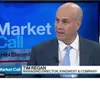
Bonds. Government yields are at rock-bottom levels and the spread between them and corporate bonds is slowly shrinking down to where they were prior to the 2008 crisis. High yields have had phenomenal returns in the last 12 months and have come out of the gate this year still very good. Last year there might have been a deal with an 8%-9% coupon but those are now 5%-6%. Have really dropped quite a bit. Getting late in the economic cycle for interest rates and you need to be selective and cautious.