A Comment -- General Comments From an Expert (A Commentary)
How do you match a Short position with a Long position? On a Pair trade, it is very rare to have conviction on both the Long and the Short side. It is usually only one or the other. If your focus is on the Short side because of a Short thesis on the stock, you then have to decide how you are going to take out market specific risks and industry specific risks. You then narrow it down to company specific risks. He also factors in dividends, as a Short seller is liable for that.
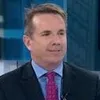 Jerome Hass
Markets. NASDAQ, S&P 500 and the Dow had new highs. A lot of investors don’t have much alternative. The bond market is now the high risk market. The moment we see rates drop, a lot of the people with ETF’s and fixed income mutual funds, are going to get a sudden unpleasant surprise. You can also lose money with bonds. One of the surprises of the market is that bearishness is also at high levels, and there is a lot of cash on the sidelines. Thinks it is some of the bond money spilling over. Thinks that BREXIT, if it happens, is going to happen in a very modified way, and that the UK is going to remain as part of that whole economic package.
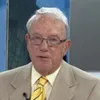 David Cockfield
A low volatility ETF? He has BMO Low Volatility Cdn Equity (ZLB-T) and BMO Low Volatility US Equity (ZLU-T). He watches these fairly close. They continue to outperform their comparative markets.
David CockfieldCanadian Banks? In his portfolios, he has the Toronto Dominion (TD-T) and Bank of Montréal (BMO-T) and Bank of Nova Scotia (BNS-T) as core positions. They are quite different from each other. Canadian banks in general are better managed and more equipped on the electronic side and with the systems, compared to the typical US banks. You could also Buy a Bank ETF which will give you more diversification, and is not a bad way to go.
David CockfieldMarkets. 100 years ago the president of France said that war is too important to be left to the military. What we have today is an economic war that the central banks are trying to win against investors. We had 5 quarters in a row in which the S&P earnings have been slipping. The market is too important to be left to investors so the central banks are intervening and in Japan they are massively buying equities. The US election is a critical breakpoint in time. The Fed has to get it ‘there’ come hell or high water. Otherwise Hillary looses and who knows what happens then. Central banks are keeping things going at least until November.
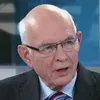 Ross Healy
Precious metals. We have had a great move in the stocks. There is probably still more risk of being out of them than being in them, despite the move. The catalyst for the move has been zero or negative interest rates globally. The move in golds was due partly that they were oversold, but the margins of these companies are able to demonstrate with the up-move in gold obviously magnifies the move in the gold price. Bear markets are the authors of Bull markets. You have to have the courage to invest in the bear markets, so that you are positioned to sell during the bull markets. It seems like there is widespread economic malaise. If you believe, as he does, that gold trades inversely to fiat currencies, particularly the US currency, and particularly the US currency expressed in the US 10-year bond, that bond was in a 35-year bull market. The yield fell from 15.6% to 1.3%. Can it fall further? Yes, but how much further. If you follow the logic that gold trades inversely to the bond, and that the bond market after 35 years is running long in the tooth, that would suggest that the gold bull market is very early in the game. Thinks there is an absolute train wreck coming, both on Bay Street and Wall Street in stressed energy credits. Credit tightness happens about once every 10 years in resource markets, and are usually pretty good events to take advantage of. The energy market is so much larger than it was last time, that he is expecting an absolute deluge; really spectacular opportunities beginning in the 4th quarter of 2016, and probably extending all the way through 2017.
 Rick Rule
Markets. We have had a scare, with BREXIT having a big washout, followed by a huge snap back. That snap back occurred during the seasonal Summer rally period, from the end of June through to the earnings season. From a seasonal perspective, everything is working out quite well this year. We are now entering into the most volatile time of year for stocks. Over the next 2 months, September in particular, equity markets tend to be particularly weak. In September alone, the S&P 500 averages a decline of about .6%, and has only been positive 44% of the time. The TSX has only been positive 40% of the time, with a loss of 1.9%. It’s those declines that can really washout portfolio returns. We could see a volatility washout because volatility is exceptionally low right now and everybody is very complacent. The VIX has been hovering below 12, well below average for this time of year. The average is 20. With complacency reigning, it is probably not best to be overly aggressive in the market at this time. For investors that are wanting to hedge their portfolios, he would suggest doing it through Puts.
 Jon Vialoux
Natural gas? This has been interesting. Last week we saw the first draw down in natural gas inventories during the summer in the last 10 years. With consumption higher than average and production lower than average, it has drawn upon inventory levels. The chart on UNG-N shows a double top has formed, and the stock fell below its support level today, so there could be a bit of downside pressure. September all the way through to December is the period of seasonal strength for natural gas. Usually the peak is in Oct/Nov. September is an ideal time to pick this up.
Market. This has been a funny market this whole year. In the Canadian market, there has been so much of the golds and energy moving. We have also had BREXIT, which was a full macro sort of scene. Then you have the Fed which has been driving a lot of expectations. She thinks Fed expectations are going to be a big mover. There were huge rallies in yields early in the year, but the Fed backpedaled from their story of raising rates. With fear levels up, it is amazing that we are hitting new highs. Her preference is to own stories where there is a little bit of yield generation at the company level, and from that standpoint, she thinks cyclicals are a better place to be.
 Jennifer Radman
Markets. Macro has always been difficult, and in this environment it is the hardest it has ever been. Not only is it hard to predict what events are going to happen, but the market’s reaction to those events can be totally different than expected. One thing he thinks we have learned from BREXIT is that the world is laser focused on Central Banks and focused on long-term interest rates being lower for longer. His firm’s mission is to modernize equity research, which is done by building equity research tools for his buy side and sell side clients, institutional portfolio managers, and analysts. He builds out fully working financial models for all companies in Canada over $30 million in market cap.
 James Rife
'%20fill='%23ffffff'%3e%3cg%20id='Pager'%20transform='translate(423.000000,%201755.000000)'%3e%3cpath%20d='M243.295367,17.286474%20C243.68919,16.9045087%20244.327703,16.9045087%20244.721525,17.286474%20L249,21.4361302%20L253.278475,17.286474%20C253.672297,16.9045087%20254.31081,16.9045087%20254.704633,17.286474%20C255.098456,17.6684393%20255.098456,18.2877274%20254.704633,18.6696927%20L249.35654,23.856763%20C249.159628,24.0477457%20248.840372,24.0477457%20248.64346,23.856763%20L243.295367,18.6696927%20C242.901544,18.2877274%20242.901544,17.6684393%20243.295367,17.286474%20Z'%20id='Path'%20transform='translate(249.000000,%2020.500000)%20scale(-1,%201)%20rotate(-90.000000)%20translate(-249.000000,%20-20.500000)%20'%3e%3c/path%3e%3c/g%3e%3c/g%3e%3c/g%3e%3c/svg%3e)
'%20fill='%23ffffff'%3e%3cg%20id='Pager'%20transform='translate(423.000000,%201755.000000)'%3e%3cpath%20d='M243.295367,17.286474%20C243.68919,16.9045087%20244.327703,16.9045087%20244.721525,17.286474%20L249,21.4361302%20L253.278475,17.286474%20C253.672297,16.9045087%20254.31081,16.9045087%20254.704633,17.286474%20C255.098456,17.6684393%20255.098456,18.2877274%20254.704633,18.6696927%20L249.35654,23.856763%20C249.159628,24.0477457%20248.840372,24.0477457%20248.64346,23.856763%20L243.295367,18.6696927%20C242.901544,18.2877274%20242.901544,17.6684393%20243.295367,17.286474%20Z'%20id='Path'%20transform='translate(249.000000,%2020.500000)%20rotate(-90.000000)%20translate(-249.000000,%20-20.500000)%20'%3e%3c/path%3e%3c/g%3e%3c/g%3e%3c/g%3e%3c/svg%3e)

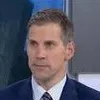



Long & Short Strategy. Over the last 8.5 years, he’s been about half market exposure, but at any given time, has about half the portfolio going Long and half going Short. He is largely agnostic to what the market does because of the Pair trading. These aren’t great market conditions, because he always has insurance in place in the form of Short positions. When the market rises, the Long positions go up but the Short positions go up as well. Because he typically tends to be Long “quality”, Short “lesser quality”, in this kind of a market it is actually pretty tricky for him. It surprises many people to know that he actually likes the growth of ETF’s as it makes his job easier. Essentially ETF’s invest passively. People running an ETF fund look at what the index weighs in the stock and try to replicate that percentage in the most efficient way possible, and try to be as tight as they can with the index. As a consequence, they are really price takers, so the more people that are using ETF’s, the less people that are engaged in active investing, which involves price discovery. The less and less people that are giving that price discovery, ironically the better returns from the research that the people can go out and establish what the true intrinsic value of the stock should be. One restriction is, he doesn’t do any resource stocks.