A Comment -- General Comments From an Expert (A Commentary)
BC junior gold miners? Northwestern BC is extremely active; largely as a consequence of the tremendous discovery made by Pretium (PVG-T). That is a very mineral rich part of the world. Although those stocks are ahead of themselves on a global basis, they will probably continue to do well as a consequence of money flowing into gold, and money flowing into Canadian mining stocks generally.
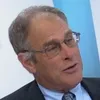 Rick Rule
Market. Thinks the reason for the Trump win has been something that has been going on for the last couple of years. We recently had BREXIT, Justin Trudeau rode to power on a popular wave, Brazil and Argentina lost their governments, etc., etc. The voting population is generally unhappy. If you listen to all the rhetoric, higher rates are going to come, and banks are going to go back to the old days of interest rates of 1.5% for lines of credit, etc. It is also going to allow banks and organizations to start to grow and to reinvest in R&D. That will be a stimulus for the economy and will create demand for higher paying jobs, rather than the part-time, underemployed workforce that we have recently seen. You are definitely going to see a selloff in staples, utilities, and even the pipelines to some degree. You are going to have to be very careful how you tread, because as interest rates rise, it is going to be a negative impact for fixed income. It is a little too early to check the emerging-market rally right now, because when rates do go up, you are going to see another selloff, because a lot of the debt in the emerging markets is US$ denominated.
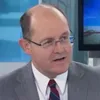 Darren Sissons
How can a person benefit from a downtrend in the Canadian economy? Generally, the way international investors do that, is by putting capital in other markets. When the global financial crisis hit, Canada held up very, very well, so what investors did is to just export capital to Canada, and the 1st place they went to was the banks. One of the obvious things you can do is to just buy a basket of currencies and/or a basket of international blue chips. Another way is to Short the banks, but in this environment, he would not be doing that.
Darren SissonsMarkets. The reaction to the Trump victory initially was the accurate one. It is tough to find people who saw this coming. His policies are pro-growth. He is bringing cash home from other jurisdictions so it can be spent in the US, which is pro-growth. Some of his policies are very good, but people worry about some of what he will do on a global basis. What has come out of this is a very strong rally. The defensive sector has not paid off in the last couple of days. There has been a massive rotation in the last couple of days. Industrials and infrastructure stocks have benefited.
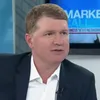 Gerard Ferguson
Keystone and the impact on various companies. You need to focus on the price of oil short term. The ability of Canada to get oil out of the country is a long-term factor where as price is a short term factor. OPEC discussing quotas is more important short term than Keystone.
Gerard FergusonMarket. His firm tries to prepare for worst case scenarios, and anything above that is gravy. He tries to buy businesses that are so sustainable that they are going to be around no matter who is president and no matter what is going on in the world. The most important thing is just being invested, and to preserve and grow wealth over time. We are now facing an environment where the market has done a bit of a 180 here with his view of Donald Trump. The most interesting thing are the bonds selling off, with potential inflationary pressures. In that environment, you want to own equities. He wouldn’t hold cash as a pure defence, because that is where you might get hurt because of 1) a low inflationary environment and 2) given low interest rates. Trying to always take the “middle ground” through thick and thin tends to work pretty well.
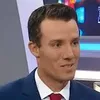 Ryan Bushell
Canadian Banks? All the big 5 banks right now are reasonably valued. He would be averaging into them slowly, take a 3rd position now, maybe another 3rd 2 months from now, and the final 3rd 6 months from now. These are oligopolies that have reduced competition that allows them to have profitable businesses. 4% yield roughly.
Ryan BushellMarket. There is still a great uncertainty. We are seeing gold move higher, after a long run of going lower. Investors are going there for the safety it represents. Markets could be volatile for a bit going forward. This is not a day to be changing strategies or to be jumping into the market one way or another.
 Liz Miller
Markets. A strange turnaround from last night to this morning due to the US Election. He was surprised by the strength after rallying Monday on the idea that Hillary could be elected. Investors just like certainty at this stage. You might want to wait for clarity on certain policies before committing a lot of money. Markets will probably grind higher from here. There is execution risk as well as headline risk around these policies. A lot of names that were particularly strong today were also probably heavily shorted and short covering was taking place. The lower for longer trade is fading.
 Daniel Lloyd
Market. If Mrs. Clinton wins the election, the knee-jerk reaction will be to sell Pharma stocks, and that will be a great buying opportunity. He likes buying stocks that are out of favour, and Pharma has been out of favour for a while, expecting this.
 Norman Levine
Market. Most of the positioning he has done has been happening over the past 6 months. He would argue that the vast majority of individuals have really set themselves up rather defensively. There is probably an avalanche of cash ready to come into this market. You have to remember that the markets were adjusting, really since last June, even when Trump announced. November was a big turning point for healthcare, and has been nothing but downhill ever since last November. He has had cash in his portfolio for quite some time, and is not afraid to have it because if Trump wins decisively, there are a lot of investment houses that think the market will drop 7%-12%, and a lot of people think that a Clinton win will have the market rise 3%-4%, and those are not the kind of risks/rewards he was hoping for.
 Mike S. Newton, CIM FCSI
Natural gas? The natural gas markets have had a really good run, and have just come back a little. He is not an expert on the natural gas market and the ins and outs of supply and demand. Has owned Peyto (PEY-T) for the whole year and it has been a great move, but has come off quite a bit lately. Thinks there is a little bit of positioning when you look at all the positions in coal right now. He would be quite happy to pick up Peyto at this time. Has had a tough time playing natural gas through an ETF.
Medical marijuana? In the US there are 4 states that have a ballot on marijuana. He doesn’t take this issue really seriously. The problem long-term, is when regulations start coming in. When utilization comes in, you then have forces in place that are going to cause excitement to wane a little. Then from a few enjoying the fruits of this early move, it becomes more broad. This is going to be more about a trading approach to these names than anything fundamental. If you see things going parabolic, take a little bit off your investments when you are looking at it as being too good to be true.
Markets. It was clear when the FBI update came out that Markets really want to see a Hillary victory. The best case in his view is that republicans control all three parts of the house. Right now the senate is a toss-up according to polls. He thinks CEOs would wait 6 months before making any capital investments if Trump wins as they see how it goes. The rest of the world outside the US is questionable on growth. There is an asymmetric risk like in Brexit because the market is not priced for the potential that Trump wins. Polls seem to hit more people with home phones and that live in cities. Markets are priced for a Hillary win and not a Trump win or a house sweep, but it is that close. You might think of using a volatility based ETF as a hedge in the short term.
 Larry Berman CFA, CMT, CTA
'%20fill='%23ffffff'%3e%3cg%20id='Pager'%20transform='translate(423.000000,%201755.000000)'%3e%3cpath%20d='M243.295367,17.286474%20C243.68919,16.9045087%20244.327703,16.9045087%20244.721525,17.286474%20L249,21.4361302%20L253.278475,17.286474%20C253.672297,16.9045087%20254.31081,16.9045087%20254.704633,17.286474%20C255.098456,17.6684393%20255.098456,18.2877274%20254.704633,18.6696927%20L249.35654,23.856763%20C249.159628,24.0477457%20248.840372,24.0477457%20248.64346,23.856763%20L243.295367,18.6696927%20C242.901544,18.2877274%20242.901544,17.6684393%20243.295367,17.286474%20Z'%20id='Path'%20transform='translate(249.000000,%2020.500000)%20scale(-1,%201)%20rotate(-90.000000)%20translate(-249.000000,%20-20.500000)%20'%3e%3c/path%3e%3c/g%3e%3c/g%3e%3c/g%3e%3c/svg%3e)
'%20fill='%23ffffff'%3e%3cg%20id='Pager'%20transform='translate(423.000000,%201755.000000)'%3e%3cpath%20d='M243.295367,17.286474%20C243.68919,16.9045087%20244.327703,16.9045087%20244.721525,17.286474%20L249,21.4361302%20L253.278475,17.286474%20C253.672297,16.9045087%20254.31081,16.9045087%20254.704633,17.286474%20C255.098456,17.6684393%20255.098456,18.2877274%20254.704633,18.6696927%20L249.35654,23.856763%20C249.159628,24.0477457%20248.840372,24.0477457%20248.64346,23.856763%20L243.295367,18.6696927%20C242.901544,18.2877274%20242.901544,17.6684393%20243.295367,17.286474%20Z'%20id='Path'%20transform='translate(249.000000,%2020.500000)%20rotate(-90.000000)%20translate(-249.000000,%20-20.500000)%20'%3e%3c/path%3e%3c/g%3e%3c/g%3e%3c/g%3e%3c/svg%3e)


Gold? People had a visceral reaction to the Trump win. You buy gold in the US, because the deficit will be $1 trillion next year, irrespective of who is president. There are balance sheet liabilities that are approaching $20 trillion. You buy gold because there is a negative real, and sometimes negative nominal interest rate, and because spending globally is out of control.