Halloween Sale
50% off Premium Yearly
A Comment -- General Comments From an Expert (A Commentary)
You have to be in the US market, but it depends on the currency you're in. US dollars are ideal, though every portfolio should have a mix of currencies including Euros. The US is outperforming though the S&P has not. Similarly, Asian tech has had surprising recent down weeks, including Alibaba's sudden downturn. Any FANG tech stock that misses an earnings report suffers a vicious downturn. Trump's trade fight against China: China is not the underdog and can in fact fight back, like dumping U.S. treasury debt notes that would put severe pressure on the U.S. dollar. China could also prevent American companies from sending capital back to the U.S. that would cause carnage in U.S. markets--and Trump can't afford to have the markets tank. The U.S. picking a fight with three guys--China, Europe, Canada--and this will only lead to an America nosebleed. Meanwhile, dividend payers like telcos are attractive now, so the sell-off these stocks is premature.

Market. Markets in the US have not responded to trade wars. We are coming up to mid-term elections and the markets don’t like uncertainty. These will be volatile months. It is justified for the US market to do well but there is uncertainty. Tax reform is being used as a reason for the US market doing well. They are trying to reintroduce another round of tax reform and it is debatable as to whether this will do well. There will be volatility in the markets. It is difficult to say how the markets will react to the mid-term elections.
 Larry Berman CFA, CMT, CTA
Distributions in a rising rate environment. REITs can raise their rates. XRE-T can be compared to interest rates. We saw REITs do well this summer for a seasonal reason. REIT returns are generally safe even in a rising rate environment. Distributions are safe but you have to ask if they are attractive in a rising rate environment.
[Caller wanted 3% return for a year or two]. This is risky because if the market goes back up where do you go back in again? There are option calls. Utilities or REITs still have quite a bit of volatility. There are covered call ETFs.
Larry Berman CFA, CMT, CTAEducational Segment. Breadth, lack thereof, and what it means to you. It is terrible. There are various ways to measure it. He is talking about the US market being one of the only ones around the world to be in positive territory. Canada has gone negative for the year as has much of the rest of the world. Emerging markets seem a good buy because they are terribly cheap, but ACWX on London shows how world markets are going down. The S&P index has been going up, but is marginally positive if you take out the top 5 stocks. The markets tend to get narrower and narrower until some major event takes place. Either US markets have to go down or emerging markets have to go back up. Most likely it is the US market that will go down. Stay away from emerging markets. Consumer staples will do well in the fall. The Canadian dollar does well compared to the US as we approach Christmas.
Larry Berman CFA, CMT, CTAMarket. Everyone is back to work and volumes in the markets are back up. It is an interesting time in the markets. ACB-T made another acquisition. They are being very acquisitive. This is one of the largest and are trying to gain scale as quickly as possible. They are using their stock as capital and he would do that in their position. Canopy has a big head start in the industry.
 Colin Stewart
Market. He thinks we can expect something more from Canada before the end of the year. The FANG stocks have lead the US and Canada is not deep in technology stocks. He expects Canada to play catch-up with the US. Earnings will improve in the banks. Resources could rally. The Canadian housing market has held in quite well. We should get a rally going.
 Gerard Ferguson
Market. He thinks oil is likely to break below $60 soon. Inventories of gasoline and distillates continues to rise and now we are heading into the end of the gasoline driving season in the US. He expects US demand to drop by 1.0-1.5 million barrels per day as a result. OPEC production continue to increase despite about 150,000 barrel per day decline out of Iran. He expects the TSX Energy index to drop to 160 from 187 today. Trans Mountain pipeline delays, LNG uncertainty and service industry stock hits are all setting things up for a “table pounding” buy opportunity soon – likely in November and December during tax loss selling season. He thinks they will have over 20 companies on their recommended buy list during that time. He prefers natural gas stocks ahead of an expected LNG announcement.
 Josef Schachter
Energy or Cannabis? If a general stock market correction occurs and cannabis stocks take a hit due to margin collapse, investors may run from volatility of the cannabis stocks. He thinks energy still needs to earn its place first, with fresh buying back from investors (which he expects following the tax loss selling season in November or December). He expects another bull market for oil and natural gas in the next few years – WTI back to $100 and AECO at $4.00/GJ.
Josef SchachterHow do you make money these days? It’s been very frustrating. Doesn’t own FANGs, but does own marijuana privately. We’re long in the cycle. Not a lot of breadth, which is usually a sign of the top, though the top comes when no one expects it. Interest rates still low, bonds don’t pay much, yet dividend payers are being sold wholesale. It’s FOMO. He can’t bring himself to hold or buy the big weed companies. He has a problem with the market cap. Can have a good company, but a bad stock. Hard for pot stocks to backfill the valuation. It’s a great industry, and Canada is breeding the frontrunners.
 Fabrice Taylor
When will we get a real idea of cannabis market cap? Won’t see a lot of people take it up, if they don’t already use it, because people don’t want to smoke, period. People aren’t going to jump in just because it’s legal. Good long-term potential, but first we’ll need to see products that people are interested in.
Fabrice TaylorMarket. Hexo has an active shareholder saying they did a bad job of getting the stock price up. He disagrees. He thinks it has gotten very high. He does not own anything in this space. This reminds him of the Internet bubble in '98. A few players maintained and grew. With Cannabis, you have a timeline into next spring. NAFTA affects specific companies. MG-T has taken a drop because of the uncertainty. Rationality is not a factor today.
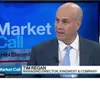 Tim Regan
Market Outlook. Emerging Markets are an area of the world where there is a lot of macro misinformation. Now it is oversold, and he is positive on emerging markets contrary to what many people feel. He is not in Turkey and Argentina. He would focus on countries that have taken structural reform seriously and have a growing middle class. He thinks that the biggest story of our time is the rising middle class in Asia. N develop countries we have aging demographics, high debt levels, large mortgages. It is very uncommon to find that in emerging countries.
 Tyler Mordy
Given that Mexico had progress on NAFTA negotiations, what is the effect on Mexican Stocks? They bought iShares MSCI Mexico ETF (EWW-N) last quarter in advance of the macro misinformation was there before the election. He thinks it is a little overbought now and wouldn’t buy it now.
Tyler Mordy'%20fill='%23ffffff'%3e%3cg%20id='Pager'%20transform='translate(423.000000,%201755.000000)'%3e%3cpath%20d='M243.295367,17.286474%20C243.68919,16.9045087%20244.327703,16.9045087%20244.721525,17.286474%20L249,21.4361302%20L253.278475,17.286474%20C253.672297,16.9045087%20254.31081,16.9045087%20254.704633,17.286474%20C255.098456,17.6684393%20255.098456,18.2877274%20254.704633,18.6696927%20L249.35654,23.856763%20C249.159628,24.0477457%20248.840372,24.0477457%20248.64346,23.856763%20L243.295367,18.6696927%20C242.901544,18.2877274%20242.901544,17.6684393%20243.295367,17.286474%20Z'%20id='Path'%20transform='translate(249.000000,%2020.500000)%20scale(-1,%201)%20rotate(-90.000000)%20translate(-249.000000,%20-20.500000)%20'%3e%3c/path%3e%3c/g%3e%3c/g%3e%3c/g%3e%3c/svg%3e)
'%20fill='%23ffffff'%3e%3cg%20id='Pager'%20transform='translate(423.000000,%201755.000000)'%3e%3cpath%20d='M243.295367,17.286474%20C243.68919,16.9045087%20244.327703,16.9045087%20244.721525,17.286474%20L249,21.4361302%20L253.278475,17.286474%20C253.672297,16.9045087%20254.31081,16.9045087%20254.704633,17.286474%20C255.098456,17.6684393%20255.098456,18.2877274%20254.704633,18.6696927%20L249.35654,23.856763%20C249.159628,24.0477457%20248.840372,24.0477457%20248.64346,23.856763%20L243.295367,18.6696927%20C242.901544,18.2877274%20242.901544,17.6684393%20243.295367,17.286474%20Z'%20id='Path'%20transform='translate(249.000000,%2020.500000)%20rotate(-90.000000)%20translate(-249.000000,%20-20.500000)%20'%3e%3c/path%3e%3c/g%3e%3c/g%3e%3c/g%3e%3c/svg%3e)