A Comment -- General Comments From an Expert (A Commentary)
What ultimately drives share prices of an ETF? Is it actual trading or only a reflection of the trading of the underlying securities? Or both? It tends to be a bit of both. In Canada it is the NAV that will determine the starting price but during the day, supply and demand can move the price off the NAV a little bit. In the US it trades much tighter.
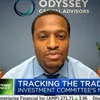
 Terry Shaunessy
Platinum. Main catalyst for platinum and palladium is the catalytic converter market which is driven by the auto sector. A lot of demand for automobiles is coming out of places like China and India. There had been some issues with mine shutdowns in South Africa. It is a very small market and the impact is going to be quite significant from the shutdowns.
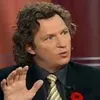 Charles Oliver, HBSc CFA
Gold. Has been very frustrating. A lot of things are happening that he had been expecting such as QE. QE announced printing of about $85 billion a year. US is going to print about $1 trillion. Their monetary base is up 2.6 trillion at the end of last year, which effectively means that their monetary base can be up 40% next year. In that kind of environment, gold prices and stocks should just be taking off. Germany is calling for their gold to be repatriated indicating that countries don’t trust each other’s currencies and central bank actions. Expects gold will go well beyond the $2000 that he was predicting last year.
Charles Oliver, HBSc CFAPrecious metals mining stocks. Underperformed last year so he is seeing a lot of opportunities. Valuations are spectacular again. Has been waiting for this tipping point which he would have thought would have come last year. So far we are off to a reasonable start and he remains very optimistic.
Charles Oliver, HBSc CFAResource stocks. It will be global growth that drives resource stocks this year as well as increasing and better performing ISM numbers as well as purchasing managers’ numbers. When you see industrial economy starting to pick up, that will be the catalyst for resource stocks. Expect it will be a modest year for resources except for a few exceptions such as energy as well as some materials but he is not so optimistic on precious metals.
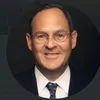
 John Stephenson
Markets. There is a lot of scrutiny on the placing of audits these days. Would not be surprised at more law suits regarding companies missing at audits. The roll of the audit is increasingly important from the point of the view of the market. Every time Obama speaks, markets react badly. He doesn’t expect much today as he will speak on the 29th in a state-of-the-union address. [Obama’s address is essentially expected to pre-empt all or part of today’s Berman’s Call] The debt limit has to go up and has to keep going up and up until they balance the budget. Don’t expect anything different.
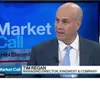
 Larry Berman CFA, CMT, CTA
How do bond markets negatively impact dividend stocks? If interest-rates rise,, typically interest-rate sensitive stocks go down initially. He feels this is a short-term of 1 to 2 years phenomena and after that the stocks can do pretty well. Keep in mind that currently interest rates are so low that, it doesn’t matter what company, they have reduced their charges substantially. Doesn’t think this is a lasting thing.
Markets. Seeing really great opportunities in stocks and nothing in fixed income. Markets are relatively inexpensive and he sees pretty good earnings growth this year and a much calmer global environment this year. Investors are getting the message that they have to their money to work.
 Barry Schwartz
Markets. Thinks 2013 will be a good year. Just a continuation of what we have seen since 2008-2009. Still seeing a lot of fear in retail investors not wanting to get into equities and the market. Sees this as a progression from the fear spectrum in the market over to getting to risky and toppy in what she sees as a bend in the market. We are still more on the fear side which gives her a bit of confidence that it will be a good year. Sees the central bankers as doing their job in providing as much stimulus as possible to keep things going.
 Jennifer Radman
How does withdrawing money from a TFSA affect the contribution than the going forward? Let’s say you put in $5000 a year or 2 ago and it has gone up by 10% and is worth $5500. You take the $5500 out, you still have $5500 worth of room to put back in. You can always put as much back as you took out. Conversely, if you put in $5500 and it dropped by 10% and is now worth $4500 and you take out the $4500, you can only put in $4500.
 John DeGoey
Individual stocks as a pension strategy compared to annuities, ETFs and mutual funds? You need to remember that all these things are building blocks and there is no single building block that is unequivocally better all the time. Securities are better in that there are no MER’s and no cost to them but you generally need to have a lot of them, probably a large 7 digit portfolio because you have to diversify by sector and geography. Mutual funds are expensive and annuities are not paying much so probably the best building blocks are the ETFs.
John DeGoeyUS Stocks? Should these go in a registered plan or non-registered? Is there any problem with the dividends being withheld? Generally it is better to hold US stocks in a non-registered account. You might want to look at, not just US stocks, but international stocks and emerging-market stocks.
John DeGoeyWith a defined pension plan, should other investments be balanced 50/50 fixed income and stocks or 20/80? This depends on how old you are and how big your defined pension plan is. You probably want to get some jazz into your portfolio. If you have half of your money in a pension and half in a discretionary areas, you could probably safely put 100% of your RRSP money into stocks because your defined pension is like a giant bond portfolio.
John DeGoeyIs anything lost by transferring stocks from a TFSA to a RRSP? No. You don’t lose anything other than maybe opportunity costs for putting new money back into your TFSA
John DeGoey'%20fill='%23ffffff'%3e%3cg%20id='Pager'%20transform='translate(423.000000,%201755.000000)'%3e%3cpath%20d='M243.295367,17.286474%20C243.68919,16.9045087%20244.327703,16.9045087%20244.721525,17.286474%20L249,21.4361302%20L253.278475,17.286474%20C253.672297,16.9045087%20254.31081,16.9045087%20254.704633,17.286474%20C255.098456,17.6684393%20255.098456,18.2877274%20254.704633,18.6696927%20L249.35654,23.856763%20C249.159628,24.0477457%20248.840372,24.0477457%20248.64346,23.856763%20L243.295367,18.6696927%20C242.901544,18.2877274%20242.901544,17.6684393%20243.295367,17.286474%20Z'%20id='Path'%20transform='translate(249.000000,%2020.500000)%20scale(-1,%201)%20rotate(-90.000000)%20translate(-249.000000,%20-20.500000)%20'%3e%3c/path%3e%3c/g%3e%3c/g%3e%3c/g%3e%3c/svg%3e)
'%20fill='%23ffffff'%3e%3cg%20id='Pager'%20transform='translate(423.000000,%201755.000000)'%3e%3cpath%20d='M243.295367,17.286474%20C243.68919,16.9045087%20244.327703,16.9045087%20244.721525,17.286474%20L249,21.4361302%20L253.278475,17.286474%20C253.672297,16.9045087%20254.31081,16.9045087%20254.704633,17.286474%20C255.098456,17.6684393%20255.098456,18.2877274%20254.704633,18.6696927%20L249.35654,23.856763%20C249.159628,24.0477457%20248.840372,24.0477457%20248.64346,23.856763%20L243.295367,18.6696927%20C242.901544,18.2877274%20242.901544,17.6684393%20243.295367,17.286474%20Z'%20id='Path'%20transform='translate(249.000000,%2020.500000)%20rotate(-90.000000)%20translate(-249.000000,%20-20.500000)%20'%3e%3c/path%3e%3c/g%3e%3c/g%3e%3c/g%3e%3c/svg%3e)