Halloween Sale
50% off Premium Yearly
A Comment -- General Comments From an Expert (A Commentary)

IPOs are strange animals. They're presented as something to buy because it has the glitter. Yet you have to look at why it's for sale. It's because the seller thinks it's a good time to get a premium price. Does he really want to be on the other side of that trade? No.
Let an IPO happen, let it settle, let it prove itself as a good-quality company. Then see if you want to make an investment.
Indices have run up quite sharply since the March 30 low. We're seeing a working off of overbought conditions (especially in semiconductors). Underneath the surface a lot of areas of the market have consolidated.
As we speak, the market looks today as though it's trying to reaccelerate. Discretionary has rallied, as well as industrials, which are some of the more risk-on areas that have been under pressure for the last week or so.
Beyond this short-term correction, his team is very constructive. It appears that a broader, intermediate-term, 3-6 month rally is underway. That should take us into July.
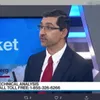
Yes -- things like discretionary, industrials, and more risk-on parts of the market. In his view, we're in a new 4-year cycle (essentially, a 3-5 year cyclical bull market).
We're in the expansion phase of the business cycle. This phase should take us sometime into the middle of 2027, and that's despite geopolitical risks.
If you go back all the way to WW2, these 4-year cycles operated almost like clockwork. Every 4 years you'd get this major low.
Now, because information is flowing faster, these cycles are truncating. Any kind of really large geopolitical event (such as the conflict in Iran) will raise energy prices, and we'll see knock-on effects later this summer. His team will react accordingly.
They were very concerned as we moved through the conflict to the end of March. But markets have repaired themselves. From his long-term cycle work, it looks as though markets are back on track.
What they saw was that 3 of the top 4 strongest sectors were energy, materials, and staples. Those are typically the phase 3 plays that he calls the "exciting end" -- typically when the market starts to peak out.
Luckily, markets have regained their more cyclical, bullish footing. Industrials and info tech have regained their pole positions. Right now, things look positive. But one tweet or one event can put us back in the soup.
With his firm's proprietary models, every stock gets put into 1 of 4 different quadrants. Right now, all US and Canadian software stocks are in quadrant 4 (the penalty box). In a downtrend and heading lower.
On the weekly charts, these stocks are showing early signs of bottoming. His team would rather be a bit late to get in until they see signs of a bigger bottom and a turn up. At the moment it's like catching a falling knife.
All the software names are in this spot. Ultimately, some names will emerge as winners. But for the moment, the profiles all look the same. You have to tread carefully.
The whole commodity complex is taking off. As an example, look at a longer-term chart for WCP. In 2008-2009, oil reached a peak of ~$150. Since then, oil stocks have been under pressure. In 2020, crude went to $0. Move higher predicated on Russia-Ukraine conflict. Note especially that between 2022-2025, these stocks were in a range. Now a bigger breakout.
Perhaps in second half of next year we'll enter another consolidation phase. But for right now, foresees a bigger commodity cycle of 5-7 years. Very bullish for energy in general. Great opportunity to add on weakness. Those are the positive aspects.
As to the negative aspects, wait till you see the cost of filling up your tank. To combat rising inflation, central banks are going to increase interest rates. So instead of investing in equity markets, people will be getting 7-8% in fixed income. This will lead to a secular bear market.
Thinks we're headed to a period like 1970-1980 (stagflation). The S&P 500, based as it is on information technology, is really going to suffer. But something like the TSX, which is resource-driven, is going to benefit. "There's always a bull market somewhere." :) With low interest rates money has been chasing growth and mega-tech, but thinks we're coming to the end of that rainbow and there won't be a pot of gold waiting there.
A lot of energy stocks, such as pipelines, pay pretty high dividends. If inflation rises, these stocks will benefit because they're tied to the price of oil. High dividend yield, stable, and inflation protection.
The market faces many risks. First, the situation in the US-Iran changes day to day, often based on a tweet. Secondly, the reopening of the Strait of Hormuz will not happen quickly or cleanly. Thirdly, there's a disconnect between the bond and stock markets; the former is pricing in higher inflation. Canadian inflation is below American, given weak rents, but we have food and gasoline inflation. Fourth, central banks are in a tough spot, given weak employment projections and rising inflation--will banks raise or cut? She doesn't know why investors are looking past the inflation risk; she is being cautious to preserve capitals, and she won't speculate. Also, there's concentration risk in U.S. tech, nearly half the S&P being tech, specifically chips.

Market's looking through where we stand today, thinking that the Strait will open up tomorrow and we'll go back to normal. That apathy is creating the most attractive opportunity for energy stocks that he's seen in his career since the lows of Covid.
We're down 13-14M barrels per day of Middle Eastern production. All told, inventories have fallen by roughly 7-8M barrels per day. Even if the Strait opens up next month, his math says we've lost 1.8B barrels of production. You can't lose that massive number without impacting the oil price.
By July 1, the world will have lost enough inventory globally that the global refining system will start to crack. We're already starting to see shortages, and it's those shortages that will jolt the market out of this catatonic state. All the safety buffers will be gone. And we're entering the demand pickup of driving season. A price spike is the only mechanism to rebalance supply and demand.
His advisers tell him that Iran's figured out that having the Strait closed actually gives it more levers than having a nuclear weapon.

Thinks we'll be fine from an oil perspective, and we'll skate by with refined products. But we'll pay for it. If the Iran situation is not fixed certainly by Christmas, you may want to reevaluate any travel plans.
The cost of everything is going to go up -- feedstocks, transportation, gasoline, jet fuel. The inflationary shock coming will be absolutely massive.
He's excited that oil/energy stocks are discounting the oil price at roughly $65-70. His team thinks the floor price for next year is about $80 (actual price will be meaningfully higher).
Oil at $65 is an extremely ignorant view, and offers a wildly compelling entry point on energy stocks.
Depends on why the oil price is going up. Typically, geopolitical events cause a spike, get resolved, and then the price drops. That thesis is a misunderstanding this time around.
Don't buy an energy stock today on the basis that Nuttall on BNN said oil was going to $200. The investment thesis is for "the day after", when things eventually normalize. What does the world look like then? It'll take 3-4 years for inventories to restock.
He's deploying client capital today with the expectation to gain 50% in 1-2 years.
'%20fill='%23ffffff'%3e%3cg%20id='Pager'%20transform='translate(423.000000,%201755.000000)'%3e%3cpath%20d='M243.295367,17.286474%20C243.68919,16.9045087%20244.327703,16.9045087%20244.721525,17.286474%20L249,21.4361302%20L253.278475,17.286474%20C253.672297,16.9045087%20254.31081,16.9045087%20254.704633,17.286474%20C255.098456,17.6684393%20255.098456,18.2877274%20254.704633,18.6696927%20L249.35654,23.856763%20C249.159628,24.0477457%20248.840372,24.0477457%20248.64346,23.856763%20L243.295367,18.6696927%20C242.901544,18.2877274%20242.901544,17.6684393%20243.295367,17.286474%20Z'%20id='Path'%20transform='translate(249.000000,%2020.500000)%20scale(-1,%201)%20rotate(-90.000000)%20translate(-249.000000,%20-20.500000)%20'%3e%3c/path%3e%3c/g%3e%3c/g%3e%3c/g%3e%3c/svg%3e)
'%20fill='%23ffffff'%3e%3cg%20id='Pager'%20transform='translate(423.000000,%201755.000000)'%3e%3cpath%20d='M243.295367,17.286474%20C243.68919,16.9045087%20244.327703,16.9045087%20244.721525,17.286474%20L249,21.4361302%20L253.278475,17.286474%20C253.672297,16.9045087%20254.31081,16.9045087%20254.704633,17.286474%20C255.098456,17.6684393%20255.098456,18.2877274%20254.704633,18.6696927%20L249.35654,23.856763%20C249.159628,24.0477457%20248.840372,24.0477457%20248.64346,23.856763%20L243.295367,18.6696927%20C242.901544,18.2877274%20242.901544,17.6684393%20243.295367,17.286474%20Z'%20id='Path'%20transform='translate(249.000000,%2020.500000)%20rotate(-90.000000)%20translate(-249.000000,%20-20.500000)%20'%3e%3c/path%3e%3c/g%3e%3c/g%3e%3c/g%3e%3c/svg%3e)