Halloween Sale
50% off Premium Yearly
TSE:ZWU
BMO Covered Call Utilities ETF (ZWU.TO)
 Financials
  Technical Analysis
For covered call strategies, always consider the yield and the source of that yield. With this one, you'll forego some upside if utilities markets are strong, but you get more yield on an ongoing basis. Best for ongoing yield to pay your bills.
Compare it to a non-covered call alternative such as ZUT. Over the long term, outperforms the covered call on a total return basis. The better growth alternative.
Given the kind of market we're heading into, some strategists feel pretty good about utilities. Utilities are considered defensive, as people need to pay them whether the economy is good or bad; tend to have stable dividends.

ZWU is far more interest-rate sensitive, as it focuses on utility companies. Generally as interest rates fall, utilities do better. HMAX is financial services, insurance, lifecos. Falling rates not necessarily good for them, because they're more sensitive to interest rate cuts for a slowing economy with prospects of a harder landing.
So, if rates are coming down due to an economic slowdown (as he believes), then ZWU will probably outperform HMAX in the short run.



ZWU's covered call will pay a higher dividend, though FTS' is solid and growing. ZWU pays more income because you're selling calls. The downside is that as interest rates decline, utilities will improve and you will lose that upside if you hold ZWU and not a plain ETF or Fortis itself. If you are positive utilities, don't use a covered call ETF.

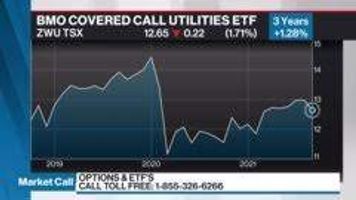
Covered calls supplement income, but sometimes the underlying security performs better over time. Not in this case, which is rare (ZWU vs ZUT). ZWU pays an 8.5% dividend, including the covered call overlay. Share price has risen since October. Utilities are not a growth area, but bought for cash flow and income. Do you want the yield or growth?
Great dividend, but not a lot of growth in terms of earnings. So total return not spectacular. Utilities don't grow at 15% earnings growth rates the way, say, a MA would.
With covered call strategies, you're missing some of the upside over time. You have to really understand what you need this for, income is a prime reason. MERs are also usually higher.

Nice income on this strategy. Yields about 8.25%. Interest rates are starting to steady and potentially pivot lower. As rates start to move lower, some of these dividend stocks, like pipelines or telecoms or banks, will look very attractive as they start to recover.
If you don't need the income, he prefers the underlying securities. Covered calls mean you lose out on some upside. Plus, these ETFs tend to charge higher expense ratios.
Dividend stocks should start to recover a bit once the 10 year bond yields start to back down. This ETF has a return of 5.6% so you can hold for when rates start to come down.
Also part of the question was on covered call strategies. Unless the underlying security is flat or falling you may see some under-performance related to the security itself
'%20fill='%23ffffff'%3e%3cg%20id='Pager'%20transform='translate(423.000000,%201755.000000)'%3e%3cpath%20d='M243.295367,17.286474%20C243.68919,16.9045087%20244.327703,16.9045087%20244.721525,17.286474%20L249,21.4361302%20L253.278475,17.286474%20C253.672297,16.9045087%20254.31081,16.9045087%20254.704633,17.286474%20C255.098456,17.6684393%20255.098456,18.2877274%20254.704633,18.6696927%20L249.35654,23.856763%20C249.159628,24.0477457%20248.840372,24.0477457%20248.64346,23.856763%20L243.295367,18.6696927%20C242.901544,18.2877274%20242.901544,17.6684393%20243.295367,17.286474%20Z'%20id='Path'%20transform='translate(249.000000,%2020.500000)%20scale(-1,%201)%20rotate(-90.000000)%20translate(-249.000000,%20-20.500000)%20'%3e%3c/path%3e%3c/g%3e%3c/g%3e%3c/g%3e%3c/svg%3e)
'%20fill='%23ffffff'%3e%3cg%20id='Pager'%20transform='translate(423.000000,%201755.000000)'%3e%3cpath%20d='M243.295367,17.286474%20C243.68919,16.9045087%20244.327703,16.9045087%20244.721525,17.286474%20L249,21.4361302%20L253.278475,17.286474%20C253.672297,16.9045087%20254.31081,16.9045087%20254.704633,17.286474%20C255.098456,17.6684393%20255.098456,18.2877274%20254.704633,18.6696927%20L249.35654,23.856763%20C249.159628,24.0477457%20248.840372,24.0477457%20248.64346,23.856763%20L243.295367,18.6696927%20C242.901544,18.2877274%20242.901544,17.6684393%20243.295367,17.286474%20Z'%20id='Path'%20transform='translate(249.000000,%2020.500000)%20rotate(-90.000000)%20translate(-249.000000,%20-20.500000)%20'%3e%3c/path%3e%3c/g%3e%3c/g%3e%3c/g%3e%3c/svg%3e)





So far this year, this one has outperformed the ZUT (not covered call). When there's a flat or tepid market, covered call strategy will give you better returns. Yield of ~7.3% remains pretty solid. Combination of dividends and deferred capital gains, so it's quite tax efficient.
Utilities remain kind of boring. Decent strategy if you need the income, but he's looking for more growth and capital appreciation.