Halloween Sale
50% off Premium Yearly
TSE:ZWU
BMO Covered Call Utilities ETF (ZWU.TO)
 Financials
  Technical Analysis

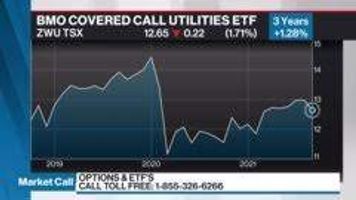
What is the downside risk? This has 80% pipelines, telcos, utilities in Canada and 20% in the US. Generally utilities, telcos and pipelines are big dividend players. This is yielding about 7%, a very nice yield, but extremely interest rate sensitive. In 2013, when the US Federal Reserve was first talking about raising rates, we had the taper tantrum. This ETF went down pretty hard, but then came back up when the Fed backed off. In 2015, there was a big drop because of pipelines, when oil prices were coming down. You have to understand what you are holding.
He doesn’t own any utility ETF’s right now. They are one of the most battered parts of the market, which would have been a great opportunity to buy around Christmas. This ETF is pretty good. It has a great yield. It has a combination of both Canadian and US utility names. This is a pretty good entry point. 6.75% yield.

Hold it in a TFSA if there is an interest rate increase? An interest rate increase is not necessarily a reason to bail on this, however, you need to recognize what you own. This would be utility stocks, and you need to have high dividend paying companies. This was a great space to be in prior to the US election, because of slow growth and interest rates pretty much on hold. Covered calls are written against half of the stocks, and the other half are allowed to grow by themselves. ZWB is probably a better place to be. It is the same structure, but a little less on the dividend side.


Pipeline stocks with Democrats staying in power. This is a reference to keystone. Trump is in favour, Hillary is not. The valuation is not great right here. ZWU-T in this sector he likes. You are diversified and they are all high dividend payers and the ETF has a covered call overlay however if interest rates were going up then this would perform poorly. He would add to this ETF on weakness.
High-yield ETF’s? The Fed is probably off the table in terms of raising interest rates. It wouldn’t surprise him if the next move was a cut. If there is an economic downturn again, the answer is lower rates, but they are not going to work. There are some big challenges ahead. He has said for years that interest rates are going to stay near zero for decades, just for the world to get a little bit of growth. If interest rates are going to stay low, then utilities are a good source of dividends because they are regulated. There is not a lot of growth, but the dividends are pretty consistent and stable. He would stick with Canadian dividends. It is still a little too early to be aggressively buying things as there is more downside to come. His favourite is BMO Covered Call Utilities (ZWU-T). You are getting a near 7% yield.
This is a good holding. They are writing Call options against utilities that are inside the ETF. What you are really capturing here are option premiums, and he thinks they write on 40% of the underlying stocks. Generally, utilities are not a growth sector, but they pay a very good dividend and they are a defensive sector. If you are writing covered calls on that, you are increasing the dividend and capping the upside. Not a bad thing in an area that doesn’t have a lot of upside. An excellent strategy if you are inside a LIF. This is a strategy that you could dovetail with other things like a REIT.
(A trading vehicle or a Hold?) Feels ETF’s are more of a Hold than a Trade. This one has done quite well and has produced some pretty good yields. Compared to the rest of the market, it hasn’t done too badly. It has a Covered Call which essentially means that when you hold a portfolio of utilities, you also write Calls on them. The problem you might have is if we suddenly have a run on the utilities, which we are having right now. Your stocks then get called away causing you to miss the upside. He hasn’t been inclined to get into Covered Call ETF’s.

'%20fill='%23ffffff'%3e%3cg%20id='Pager'%20transform='translate(423.000000,%201755.000000)'%3e%3cpath%20d='M243.295367,17.286474%20C243.68919,16.9045087%20244.327703,16.9045087%20244.721525,17.286474%20L249,21.4361302%20L253.278475,17.286474%20C253.672297,16.9045087%20254.31081,16.9045087%20254.704633,17.286474%20C255.098456,17.6684393%20255.098456,18.2877274%20254.704633,18.6696927%20L249.35654,23.856763%20C249.159628,24.0477457%20248.840372,24.0477457%20248.64346,23.856763%20L243.295367,18.6696927%20C242.901544,18.2877274%20242.901544,17.6684393%20243.295367,17.286474%20Z'%20id='Path'%20transform='translate(249.000000,%2020.500000)%20scale(-1,%201)%20rotate(-90.000000)%20translate(-249.000000,%20-20.500000)%20'%3e%3c/path%3e%3c/g%3e%3c/g%3e%3c/g%3e%3c/svg%3e)
'%20fill='%23ffffff'%3e%3cg%20id='Pager'%20transform='translate(423.000000,%201755.000000)'%3e%3cpath%20d='M243.295367,17.286474%20C243.68919,16.9045087%20244.327703,16.9045087%20244.721525,17.286474%20L249,21.4361302%20L253.278475,17.286474%20C253.672297,16.9045087%20254.31081,16.9045087%20254.704633,17.286474%20C255.098456,17.6684393%20255.098456,18.2877274%20254.704633,18.6696927%20L249.35654,23.856763%20C249.159628,24.0477457%20248.840372,24.0477457%20248.64346,23.856763%20L243.295367,18.6696927%20C242.901544,18.2877274%20242.901544,17.6684393%20243.295367,17.286474%20Z'%20id='Path'%20transform='translate(249.000000,%2020.500000)%20rotate(-90.000000)%20translate(-249.000000,%20-20.500000)%20'%3e%3c/path%3e%3c/g%3e%3c/g%3e%3c/g%3e%3c/svg%3e)





Covered Call in 60% of shares. It is in Utilities. A pretty good yield. He is pleased they expanded into US utilities. Unfortunately they do badly in increasing interest rates. He would not want to think rates were going up too fast. Premiums for options are quite low right now so the covered call feature may not be doing as well as previously.