Halloween Sale
50% off Premium Yearly
A Comment -- General Comments From an Expert (A Commentary)
What type of investor would invest on a covered call ETF vs the regular ETF with the same underlying stocks? If you want the growth you go for the dividend only. If you go for the income, you go for the covered call.
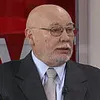 John Hood
Could you recommend an ETF in US dollars where the principal is guaranteed or protected? No, there isn’t. There is no product where there is return and absolutely no risk.
John HoodIs there any way to avoid being called away on a covered call well before the expiry day? Not really. What he does is covering everything. Maybe shop around to pay less commissions but he doesn’t like taking chances leaving the position uncovered.
John HoodMarket. He thinks interest rate increases in the US caused a pullback in utility stocks recently. Overall he sees an increase in defensive equities. There is a rotation towards value stocks and he expects interest rate sensitive sectors such as utilities, real estate, food and tobacco will face headwinds. He thinks the market is stretched and would expect a rotation into value stocks, which for Canada, he thinks, would mean mining stocks. They presently hold 18% cash and expect that to increase towards 25% at month’s end.
 Robert McWhirter
Will Provincial marijuana regulation give Canopy a shipping opportunity? A recent article by a market analyst suggested Canopy (WEED-T) has an advantage with multiple provincial locations and about 5.6 million square feet of space including a 700,000 square foot facility in Quebec expected to be in operation by May this year. He guesses their capacity will be 270 million grams per year, which should project $1.1 billion in annual sales beginning in September most likely. They are a monster in this space.
Robert McWhirterNAFTA auto talks converging between the US and Canada. Positive comments from US Trade representative on NAFTA auto talks progress is seen as good news for companies like Linamar (LNR-T) and Magna (MG-T). Also positive for North American automakers in general, where uncertainty over trade between Mexico, Canada and the US was causing some concern in that sector.
Robert McWhirterNo question, people are aging all around the world. Couple this with advances in medtech, pharmaceuticals and biotech while people grow wealthier, spending disproportionately more on healthcare. Altogether, healthcare looks
robust going forward. Pharma and drug spending are a political lightning rod, though, with the drug companies targeted before, but now the middlemen being targeted. Drug spending amounts to 10% of all healthcare expenses. Medical cannabis still hasn't entered his thesis; he needs to see more stability and history in these stocks, even though cannabis makes up a huge part of Canadian healthcare stocks.

We may have more dislocation (volatility) going into April, but after that we will see 20% growth YOY in most U.S. stocks while global stocks remain strong. Altogether this will get us back on track. Also, the U.S. housing market is picking up for the first time in 10 years. Add to that U.S. companies bringing back back capital from overseas is like six Marshall Plans, like Microsoft and Apple, which will create stimulus. Europe and Asia are booming. Everything's good. Interest rates will creep higher. Diversify away from Canada. Global trade is still good. Any interest rate increases will be moderate and won't seriously punish equities. Trump may be loose-lipped though.
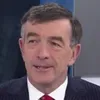
Market. He came into the year with a conservative frame of mind and more cash than usual. Valuations were too high at the start of the year but there have been good opportunities as volatility has gone up. In terms of FAANG stocks, he thinks they are hitting a wall in terms of what regulators will ignore. There is downside risk as new regulations are created, but he cannot yet tell how much. When asked which sectors he prefers, he said that his process is bottom-up, focused on individual stocks rather than sectors. However, the opportunities that have been most attractive this year have mainly been utilities and other stocks that people often think of as boring.
 Geoff Scott
Canadian Banks. He doesn’t own any of the Canadian banks. He sees risk because of the level of consumer and mortgage debt. He doesn’t see attractive rates of return in the near future but if investors must hold Canadian banks, he would recommend a higher-quality bank such as the Royal or TD.
Geoff ScottGeneral Market Comment. The next rate hearing meeting will be a big one. Expectations are a 25 basis point rate hike and this is fully priced in the market. The question is what is the outlook -- hawkish or dovish? He is also watching Facebook closely. There were 50 million people who had a data breach. There is a zone of support around $165-$170 for the stock, if this news causes a breach of this level it would be a really bad sign that the market feels this is bad news and will impact earnings going forward. He is also concerned about China and the threat the US will put tariffs in place. He thinks Kudlow will be pro-tariff against China.
 Larry Berman CFA, CMT, CTA
Canadian Bond ETFs. The current rate increases are still in the early cycle in the US and Canada will continue to lag behind. There will be some inflation pressures and bonds will sell off a bit. He expects US long bonds to yield 3.25% or higher, US 10 year 3% or higher. He does not like the yields here, he will wait a while. ZFL-T is the best ETF to play this, but be patient and wait for the yields to hit his targets.
Larry Berman CFA, CMT, CTA'%20fill='%23ffffff'%3e%3cg%20id='Pager'%20transform='translate(423.000000,%201755.000000)'%3e%3cpath%20d='M243.295367,17.286474%20C243.68919,16.9045087%20244.327703,16.9045087%20244.721525,17.286474%20L249,21.4361302%20L253.278475,17.286474%20C253.672297,16.9045087%20254.31081,16.9045087%20254.704633,17.286474%20C255.098456,17.6684393%20255.098456,18.2877274%20254.704633,18.6696927%20L249.35654,23.856763%20C249.159628,24.0477457%20248.840372,24.0477457%20248.64346,23.856763%20L243.295367,18.6696927%20C242.901544,18.2877274%20242.901544,17.6684393%20243.295367,17.286474%20Z'%20id='Path'%20transform='translate(249.000000,%2020.500000)%20scale(-1,%201)%20rotate(-90.000000)%20translate(-249.000000,%20-20.500000)%20'%3e%3c/path%3e%3c/g%3e%3c/g%3e%3c/g%3e%3c/svg%3e)
'%20fill='%23ffffff'%3e%3cg%20id='Pager'%20transform='translate(423.000000,%201755.000000)'%3e%3cpath%20d='M243.295367,17.286474%20C243.68919,16.9045087%20244.327703,16.9045087%20244.721525,17.286474%20L249,21.4361302%20L253.278475,17.286474%20C253.672297,16.9045087%20254.31081,16.9045087%20254.704633,17.286474%20C255.098456,17.6684393%20255.098456,18.2877274%20254.704633,18.6696927%20L249.35654,23.856763%20C249.159628,24.0477457%20248.840372,24.0477457%20248.64346,23.856763%20L243.295367,18.6696927%20C242.901544,18.2877274%20242.901544,17.6684393%20243.295367,17.286474%20Z'%20id='Path'%20transform='translate(249.000000,%2020.500000)%20rotate(-90.000000)%20translate(-249.000000,%20-20.500000)%20'%3e%3c/path%3e%3c/g%3e%3c/g%3e%3c/g%3e%3c/svg%3e)