Halloween Sale
50% off Premium Yearly
00days
00hrs
00mins
00secs
A Comment -- General Comments From an Expert (A Commentary)
COMMENT
Thoughts on the current market. He's still pretty fully invested. But in any market run up, not a bad time to take profits. Look for dividends, rather than growth stocks. Be a little more defensive. There's enough momentum coming out of the Fed to keep markets relatively happy. But come September, he'd be a little more concerned.
COMMENT
We're locked in a tug of war between a slowing economy and expectations for lower interest rates. US Fed Chair Powell meets with the Senate this week. Canadian oil stocks aren't attracting investors, because there is too much product that can't get out. Yes, some oil stocks are paying a high yield, but these may be too good to be true and unsustainable.

COMMENT
TRST has been punished this week for violating Heath Canada rules He doesn't own cannabis. The industry is unsettled, unclear where the value will be created and the regulations keep evolving. There's also the issue of corporate governance--who's on the board? He's seen some shady characters on the board of some cannabis companies (not TRST). Also, valuations are astronomical.
COMMENT
Where is the price of gold going? Nice to see it break out after 5 years. It's going a lot higher. The global monetary and fiscal situation is a mess. The only way central banks can keep things going is by dropping interest rates and maintaining stimulus. Gold is moving because interest rates are moving down. It's what central banks are saying about the quality of the expansion, and it's not good, so they have to drop interest rates. All things come to an end. He's looking for the S&P to reach its calculated fair market value, he calculates it at about 3100, and we're at 3000 now.
COMMENT
Market Outlook The S&P500 finally breached 3000 points. A big round number has psychological meaning. The Fed is still hinting that another rate cut may be coming. He is giving his clients the message to keep a very balanced position. Global growth is slowing and global PMI is slowing -- not a great back drop. The NY Fed Recession Indicator is getting close to predicting another recession around mid-2020. The inverted yield curve is another signal. Investors should prepare for a recession within the next 6-12 months. In the interim, you can add real estate and be defensible.
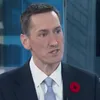 Cameron Hurst
Unknown
N/A
Market. Trade tensions are starting to impact the US economy. The whole global economy is slowing and they see a rate cut at the end of July. It is a precautionary cut. The jobs number was strong last month, but if you look at manufacturing data, we are not expanding at the levels we were at 6-8 months ago. Things are softening. The housing market has stayed flat. We are in an extended bull market but the growth has been very slow vs. other cycles.
 Christine Poole
Unknown
COMMENT
Every instinct tells him that the market will come off--correct--but not until the fall. We will skate along for the rest of the summer. Equities are strong because nothing will rock the boat. Until that comes along, we will skate along. Gold needs to pass $1,400 before he buys. The TSX chart is toppy, but it has a better chance of further upside than the American exchanges. With rates staying low, all is good for stocks. He is selling at these toppy levels in order to buy back later (when the market dips), like sell half.
N/A
Market. Central Banks with firing of the central banker in Turkey. There are parallels going on here. You have always seen techniques going on with truly overt government techniques. The government lowering rates is not going to work. You have this massive debt in the world and low interest rates, so we have to rethink policies on how to stimulate in the world. He likes that Trump makes it easier for businesses to do business. When you look at the FANGs, APPL-Q is not expensive. There is a the swath of hold recommendations so there is quite a bipolar recommendation developing.

'%20fill='%23ffffff'%3e%3cg%20id='Pager'%20transform='translate(423.000000,%201755.000000)'%3e%3cpath%20d='M243.295367,17.286474%20C243.68919,16.9045087%20244.327703,16.9045087%20244.721525,17.286474%20L249,21.4361302%20L253.278475,17.286474%20C253.672297,16.9045087%20254.31081,16.9045087%20254.704633,17.286474%20C255.098456,17.6684393%20255.098456,18.2877274%20254.704633,18.6696927%20L249.35654,23.856763%20C249.159628,24.0477457%20248.840372,24.0477457%20248.64346,23.856763%20L243.295367,18.6696927%20C242.901544,18.2877274%20242.901544,17.6684393%20243.295367,17.286474%20Z'%20id='Path'%20transform='translate(249.000000,%2020.500000)%20scale(-1,%201)%20rotate(-90.000000)%20translate(-249.000000,%20-20.500000)%20'%3e%3c/path%3e%3c/g%3e%3c/g%3e%3c/g%3e%3c/svg%3e)
'%20fill='%23ffffff'%3e%3cg%20id='Pager'%20transform='translate(423.000000,%201755.000000)'%3e%3cpath%20d='M243.295367,17.286474%20C243.68919,16.9045087%20244.327703,16.9045087%20244.721525,17.286474%20L249,21.4361302%20L253.278475,17.286474%20C253.672297,16.9045087%20254.31081,16.9045087%20254.704633,17.286474%20C255.098456,17.6684393%20255.098456,18.2877274%20254.704633,18.6696927%20L249.35654,23.856763%20C249.159628,24.0477457%20248.840372,24.0477457%20248.64346,23.856763%20L243.295367,18.6696927%20C242.901544,18.2877274%20242.901544,17.6684393%20243.295367,17.286474%20Z'%20id='Path'%20transform='translate(249.000000,%2020.500000)%20rotate(-90.000000)%20translate(-249.000000,%20-20.500000)%20'%3e%3c/path%3e%3c/g%3e%3c/g%3e%3c/g%3e%3c/svg%3e)