A Comment -- General Comments From an Expert (A Commentary)

Markets. Comparing the valuation of stocks to where bonds are, it just screams Buy. You can buy a stock with a 6%-8% dividend yield and growth. On underlying factors, things are relatively good. China has clearly bottomed and are not going into the hard landing that a lot of people were worried about. The best industrial market this year is Germany. Thinks the structural reforms are in place.
 John Zechner
Alpha and Beta stocks? Beta means how an individual stock consistently moves relative to the market. If the market goes up 20%, they go up 25%. If the market drops 20%, they’ll go down 25%. If you are bullish, you put a lot of high Beta stocks into your portfolio. Beta is a number relative to 1 with 1 being in line with the market. Alpha is about an individual stock irrespective of the market. Can this company grow irrespective of the market?
John ZechnerMarkets. There is still a lot of uncertainty with regards to the fiscal cliff and is hopeful something will be resolved before year-end and then we will have more clarity going forward. That will be a boost in confidence and then we will see the market continue to go higher. We are getting positive economic data coming out of China indicating their economy is stabilizing and maybe slowly improving. Also, German confidence this morning was higher than expected.
 Christine Poole
Markets. Toronto and Shanghai markets have been laggards because of concerns on Chinese growth and their demand for resources. TSX is only up 6%-7% but all the developed markets are up 15%-25%. Ironically, Europe is up the most at 25%. We are seeing some signs of life in the US, especially housing. Thinks there will be a continuation of this through the 1st half of 2013. We could easily see another 10%, 15% maybe in Toronto if we play catch-up and maybe 5%-10% for the other markets. Central banks are printing money.
 Gavin Graham
Natural gas. Seasonably this is the time of the year when it will have some strength. There is usually weakness once we enter the end of January and beginning of February. You might want to be a little careful at that point.
Gavin GrahamMarkets. Italy is the most indebted in Europe in US dollar terms. Thinks people in Europe will vote for less austerity and that would be tremendously disruptive. If bond returns go more than 6% there, it will be stress on the markets. If the EU lets Italy go, then Spain would be next. If they can’t grow they can’t fix this thing. The next few weeks could be pretty plain sailing for investors and the US should kick the can down the road. When Q4 earnings come out maybe the markets go for a new dip next year.
 Larry Berman CFA, CMT, CTA
Educational Segment. Employment Situation. In Canada we got a monster Canadian job number last month. He thinks there is something wrong with the data series because it doesn’t swing that much, so he doesn’t trust current employment numbers. In the US we know there is a big problem. 1in 6.5 people are on food stamps. How is that economy booming? Corporate margins are the best they have ever been because they are laying people off. From 1940 there is growth in the labour force but in the last decade it has leveled off. Forget them kicking the can down the road on the fiscal cliff. They have to make a lot of reforms and they are not making the hard choices for the next decade. Markets will go up and down. P/Es on dividend stocks are going way up and that is not sustainable. You have to be an active trader.
Larry Berman CFA, CMT, CTAMarkets. You are seeing demand destruction in the US in energy and you will continue to see that. Longer term you will see $95-$105 oil prices. US looks like weak growth and China cannot drive global demand. Thinks the government did the right think in saying we are open for business in the oil patch but not for sale. Now the more likely consolidators in Canada will likely do better.
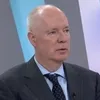 John Stephenson
Inflation. Bank of Canada has told us it has an explicit target of 2% inflation. That 2% inflation, using the old rule of 72, in 36 years your purchasing power is cut in half. Since the Federal Reserve has formed in 1913, inflation has averaged 3.2%. You cut the life of your capital down to 20 years at that rate. A typical individual who retires at 65 today is going to have between 18 and 20 years in retirement. With just that simple 2% number, you need your income to increase by roughly 40% over your retirement in order to maintain your standard of living. To offset this inflation, is to hold dividend paying stocks with reasonable coverage ratios with businesses that have the ability to pass on input cost pressures. He typically looks for businesses that are in rather controlled supply situations, producing goods and services that the broad population typically uses on a day to day basis.
 Sandy McIntyre
ETF’s? If it’s an ETF on the broad Canadian market, he wouldn’t own it. The market is roughly 50% in materials and energy, which are highly volatile businesses of good, bad and indifferent companies. If it’s an ETF on US dividend aristocrats, he would be quite interested in it.
Sandy McIntyreUS REITs? He has been increasing his exposure to US REITs consistently, over the past 3 years. Good cases are high quality assets, well tenanted, good locations, good balance sheets, low payout ratios and a very low cost of capital.
Sandy McIntyreRoyalties. With fund managers increasingly seeking dividends and income, viewer feels royalties are being ignored. Restaurant royalty companies are too small to attract funds. US energy royalty names have had a checkered history and pricing pretty close to perfection on the IPOs, so any hiccup creates problems.
Sandy McIntyreEconomy. Thinks the fiscal cliff is overplayed. It’s a no-win situation for the US because the best case they can do is keep the economy with the same amount of fiscal stimulus and the worst case is that they end up having a drag and falling off the cliff and having a drag of 3%-4%. They are either going to deal with the economy in the short term or will deal with the economy in the long-term. Tough situation. Big issue is the debt situation. Debt to GDP is 104% with deficit spending at 4%. That is like a house of cards.
 Mike MacBain
'%20fill='%23ffffff'%3e%3cg%20id='Pager'%20transform='translate(423.000000,%201755.000000)'%3e%3cpath%20d='M243.295367,17.286474%20C243.68919,16.9045087%20244.327703,16.9045087%20244.721525,17.286474%20L249,21.4361302%20L253.278475,17.286474%20C253.672297,16.9045087%20254.31081,16.9045087%20254.704633,17.286474%20C255.098456,17.6684393%20255.098456,18.2877274%20254.704633,18.6696927%20L249.35654,23.856763%20C249.159628,24.0477457%20248.840372,24.0477457%20248.64346,23.856763%20L243.295367,18.6696927%20C242.901544,18.2877274%20242.901544,17.6684393%20243.295367,17.286474%20Z'%20id='Path'%20transform='translate(249.000000,%2020.500000)%20scale(-1,%201)%20rotate(-90.000000)%20translate(-249.000000,%20-20.500000)%20'%3e%3c/path%3e%3c/g%3e%3c/g%3e%3c/g%3e%3c/svg%3e)
'%20fill='%23ffffff'%3e%3cg%20id='Pager'%20transform='translate(423.000000,%201755.000000)'%3e%3cpath%20d='M243.295367,17.286474%20C243.68919,16.9045087%20244.327703,16.9045087%20244.721525,17.286474%20L249,21.4361302%20L253.278475,17.286474%20C253.672297,16.9045087%20254.31081,16.9045087%20254.704633,17.286474%20C255.098456,17.6684393%20255.098456,18.2877274%20254.704633,18.6696927%20L249.35654,23.856763%20C249.159628,24.0477457%20248.840372,24.0477457%20248.64346,23.856763%20L243.295367,18.6696927%20C242.901544,18.2877274%20242.901544,17.6684393%20243.295367,17.286474%20Z'%20id='Path'%20transform='translate(249.000000,%2020.500000)%20rotate(-90.000000)%20translate(-249.000000,%20-20.500000)%20'%3e%3c/path%3e%3c/g%3e%3c/g%3e%3c/g%3e%3c/svg%3e)




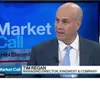
Economy. Fiscal side in the equation in the US is quite restrained. Moving forward, we are probably going to see more policies that lean on the side of austerity rather than stimulative policies. The only leverage the US government has right now is monetary policy. It looks like we should get higher interest rate in 2013 but moving forward, he thinks rates will be fairly flat. Dividend stocks, income related investments, REITs will be a good place to be and will provide a decent rate of return, but investors have to get used to a lower total return than what they have seen over the last 3-4 years.