Halloween Sale
50% off Premium Yearly
A Comment -- General Comments From an Expert (A Commentary)
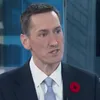
Market. There are rising corporate profits, and there is a reason for all this enthusiasm. In the 1st quarter US revenues are up 7% and earnings are up 14%. When people ask “Why is a market up?”, it is “earnings”. Stock prices follow earnings. He expects earnings to grow in the US in 2017, and analysts expect even better growth in 2018. When people say the market is expensive, maybe it is on trailing earnings, but forward earnings are not so bad. For the past 37 years on the TSX, companies that pay and grow dividends outperform any other type of companies. Those have to be the anchor in your portfolio.
 Barry Schwartz
Markets. The reversal in tech shares is quite meaningful. It stands out as what was leading the markets over the last 6 to 12 months. Look at IYW-N, the tech only ETF that is up 40% year over year, vs. the S&P being up 20%. If you are a short term trader, you could buy on pull backs, but if you are long term, wait. Buy when it tests the Trump election night levels, then it is time to step in. Looking at the UK markets, they don’t like uncertainty. BREXIT is the first part of the EU coming apart, but 5 years from now the EU won’t exist in its current form. Italy stands out as the next one to move out. The soft economic numbers are getting a bit better in Europe, but it is not free and clear. The US markets are concerned with how the Fed is going to unwind or start to unwind the balance sheet. It will pull back the liquidity of the markets just a little.
 Larry Berman CFA, CMT, CTA
If we are in a secular bull market, breaking out from $15 and change in the S&P, if we get back to those levels we would be testing the breakout of the market. And he thinks that is highly likely in the next recession. We don’t know when the next recession will hit.
Larry Berman CFA, CMT, CTACaller looking for an ETF that covers retirement homes. He has not seen one. There is definitely a growth story there. The government is considering a lot more in-home care. Something investing in that would be a terrific growth story for the next 15 years.
Larry Berman CFA, CMT, CTAEducational Segment. The US Yield Curve. There have been three rate hikes: Dec/15, Dec/16 and then Mar/17. The yield curve is the difference between the two year rate and the 10 year rate in the US. We have seen a flattening of the curve following each rate hike. Short term rates are rising while long term rates are falling somewhat. This historically means that the market is anticipating a slowdown in the economy. He would be shocked if we did not get a rate hike this week, but that should be it for this year. Longer term rates will continue to fall.
Larry Berman CFA, CMT, CTAMarkets. He used to buy tickers without knowing what they did. He did zero analysis of financials. It was just what the crowd was doing. He is a little cautious right now. We are into the traditionally worst 6 months of the year. It is interesting that the FANG stocks are rolling over. Looking at AMZN-Q, which he owns, is topping out right now. We will probably get near a 10% correction on these stocks. The question is if you will pick the exact peak and exact bottom. The likelihood is a pull back to their trend line.
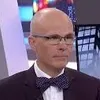 Keith Richards
WTI Oil. You are near the bottom of the trading range. It is not risky at this point, but range bound. You can trade stocks if the range is big enough.
Keith RichardsCanadian Dollar. Near term it will likely move up, based on the US$ pulling back. Oil has an influence. The longer term picture is still favourable to the US. FXC-N, long term, shows the big picture is a down trend.
Keith RichardsEnergy. The big problem with energy is that OPEC historically, when they want to resolve the issue, one cut of 1.2 million never does it, it usually is a multiple number of cuts. The problem is, with the data coming out in May, OPEC is producing 600,000 barrels a day more than demand. The 1.2 million barrels a day of compliance is being offset by Libya, which is now producing almost 830,000 barrels. They are a non-quota member of OPEC. Nigeria is now 200,000-300,000, so half of the cut by OPEC is being offset by OPEC. The US is now producing a million barrels a day more. In 1997-1999, they cut 3 times for a total of 3 million barrels. In 2000-2002 they did 4 cuts of 5 million barrels. Going to 2008-2009, they did 2 cuts of 3 million barrels. To become bullish, he would need to see them cut 2 million barrels a day more, with Saudi Arabia taking over 1 million of it. He would then become a Bull overnight.
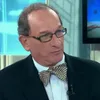 Josef Schachter
Market. There is a huge swath of stocks that are really struggling. 60% of the S&P 500 gain this year is accounted for by only 5 stocks. If you remove those stocks, you feel like you are underperforming. He suggests being constructive, roll up your sleeve and look for opportunities in sectors and stocks that have underperformed and still have opportunities. We still have a very low interest rate environment. The federal reserve is set to raise rates next week, and he expects they will be much more dovish in the commentary, and we may not get that 3rd rate hike.
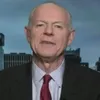 David Dietze
Commodities. As a value investor, he is interested in this area. It is an area of the market that people are kicking away because it has no growth opportunities, and that is when you want to embrace them. On the other hand, the fact they are down is almost a bullish factor for the rest of the market. We are not seeing a huge global demand, otherwise commodities would be doing better.
David DietzePercentage of foreign exposure in a portfolio? The wider you cast your net, the more fish you are likely to pick up. If you just confine your search for investment bargains to your own country, you are going to be missing a lot of opportunities. Secondly, the most important tenet of investing is diversification. That doesn’t mean you necessarily have to buy a foreign company. Many US companies have a lot of their business coming in from overseas.
David DietzeMarkets. You have so many markets at record levels that there are dangers out there. His strategy is to take things off the table or lighten up when they hit targets. He is buying less than he might otherwise have done. He lightens up when markets are bad. This is when he goes looking for bargains. The field to play in is less now. Before Trump got elected they said markets would do poorly if he got elected, but then they went straight up after the election. There is a real question as to where oil is going to go. He sees $60-$80 by the end of 2018.
 Benj Gallander
'%20fill='%23ffffff'%3e%3cg%20id='Pager'%20transform='translate(423.000000,%201755.000000)'%3e%3cpath%20d='M243.295367,17.286474%20C243.68919,16.9045087%20244.327703,16.9045087%20244.721525,17.286474%20L249,21.4361302%20L253.278475,17.286474%20C253.672297,16.9045087%20254.31081,16.9045087%20254.704633,17.286474%20C255.098456,17.6684393%20255.098456,18.2877274%20254.704633,18.6696927%20L249.35654,23.856763%20C249.159628,24.0477457%20248.840372,24.0477457%20248.64346,23.856763%20L243.295367,18.6696927%20C242.901544,18.2877274%20242.901544,17.6684393%20243.295367,17.286474%20Z'%20id='Path'%20transform='translate(249.000000,%2020.500000)%20scale(-1,%201)%20rotate(-90.000000)%20translate(-249.000000,%20-20.500000)%20'%3e%3c/path%3e%3c/g%3e%3c/g%3e%3c/g%3e%3c/svg%3e)
'%20fill='%23ffffff'%3e%3cg%20id='Pager'%20transform='translate(423.000000,%201755.000000)'%3e%3cpath%20d='M243.295367,17.286474%20C243.68919,16.9045087%20244.327703,16.9045087%20244.721525,17.286474%20L249,21.4361302%20L253.278475,17.286474%20C253.672297,16.9045087%20254.31081,16.9045087%20254.704633,17.286474%20C255.098456,17.6684393%20255.098456,18.2877274%20254.704633,18.6696927%20L249.35654,23.856763%20C249.159628,24.0477457%20248.840372,24.0477457%20248.64346,23.856763%20L243.295367,18.6696927%20C242.901544,18.2877274%20242.901544,17.6684393%20243.295367,17.286474%20Z'%20id='Path'%20transform='translate(249.000000,%2020.500000)%20rotate(-90.000000)%20translate(-249.000000,%20-20.500000)%20'%3e%3c/path%3e%3c/g%3e%3c/g%3e%3c/g%3e%3c/svg%3e)




US REITs? REITs are a bond proxy. You have to be really careful if there some reason you have to go into this area. You have industrial REITs, real estate/broker REITs, retail REITs, etc. The whole sector will be under pressure from rising rates. He would avoid this space.