Halloween Sale
50% off Premium Yearly
00days
00hrs
00mins
00secs
A Comment -- General Comments From an Expert (A Commentary)
COMMENT
Off to a decent start? So far, so good. Stocks have rebounded. Market was worried about everything all at once, it got insane. September was at all-time highs, and now we're down 13-14%, and it will take a while to get back there. We were at panic levels, where people were selling without regard for value, a lot of insane volatility. You can't explain it. At times like these, these are the opportunities you're waiting for, you have to put money to work. You want to buy when stocks are down.

COMMENT
Time to get into tech stocks? Biggest market cap stocks are hurt the most in a pullback, and they're going to come back the quickest in a rally. Apple and Facebook may not be as attractive businesses as Amazon or Google, but the valuations are incredibly cheap, so this is the time to buy. Over time, what will matter are profits. Amazon is creating one of the most durable moats the world has ever seen, though it's extremely hard to value. Microsoft is doing all the right things.
COMMENT
Time to buy Canadian telcos? Best performer last year was Rogers. BCE and Telus are the dividend payers. Looks as though interest rates now will not go up. Wireless and internet demand are huge, valuations are somewhat attractive, growth isn't going to be huge. But if you're looking for some anchors in a choppy market, buy one or two of these names.
COMMENT
In 2019, will traders look at the fundamentals again? Market will be more volatile going forward, because that's normal, but we won't see the big swings. When things settle down, they will focus on fundamentals again. When the market goes down, it feels good to own cash and bonds, but they won't win forever. You need to have stocks that have growing earnings and growing dividends.
COMMENT
Market Outlook He thinks the market sell off is a little over done. The economy is decent and he does not believe that a recession is coming soon. The recent jobs report was supportive. He feels the Fed will work well to mitigate any negative moves. Today some excellent stocks are priced 20-30% cheaper than a couple of months ago. Will we go into recession? Not anytime soon. Only the UAE market was up in 2018. 93% of all assets classes lost money -- only TBills and cash had positive returns. There was no place to hide. This means the future should bring positive returns in 2019, he believes.
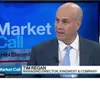 Tim Regan
Unknown
COMMENT
Equities vs. Bonds. An 8% earnings yield is implied in today's 12 PE ratio of the market -- the inversion of the PE ratio. The dividend can grow as well. While bonds are yielding 2-3%. He sees no contest, favoring equities going forward.
Tim ReganUnknown
COMMENT
The markets. Extreme volatility is the theme continuing from 2018. Historically there's not been this much volatility. Not a lot of conviction in the buyers. Trends are short-lived. Difficult to find bottoms with reversals. Don't ignore the bond market, which got hammered today. Still in a downward trend, broke through the support level of November/December, and that will act as resistance. December 2018 ranks #9 from the bottom of 480 observations, a 9.2% loss. We're retracing back to revaluation levels, and we'll see where we go next week.

COMMENT
Do you slow down US investments when CAD is weak? Likes US markets better, especially for technicians. Has 30-40% minimum in US markets, and he's not slowing down. When stocks sell off, he holds cash. CAD above 80-85 cents would cause a headache for him. But for now, he's continuing to buy US stocks. Has about 45% cash, from selling off on stops.
COMMENT
When can the CAD go lower? Long-term correlation between CAD and the price of oil. Most of last year CAD was at the 75-76 cent level. He thinks the dip to 73 cents is temporary. Biggest risk for holders of US stocks is that it will get above the 77-78 cent level, so he's going to be cautious and aware of that level. On the downside, there's a lot of support. It's good for our economy. If it got below 73, he'd be very concerned, but you'd have to see a major drop in oil for that to happen.
COMMENT
Are you buying or are you wait and see right now? Biggest risk right now is not getting in. He's getting somewhat positive. Going to be deploying cash slowly, hoping for a steadier recovery instead of a sharp increase. Looking at moving above the 30 and 40-day moving averages as an initial buying point in the S&P. Support of 2627 is now resistance, and if we can get over that he'll reduce his cash position.
N/A
Market. He built up cash going out of 2018. 2/3rds of it came from tech and a third from banks and he is waiting to deploy it. If something presents itself to them then he can go after it. The technical breakdown since December has been lower lows and then lower highs. This role-over could have more legs. The market has shifted from momentum, news driven to something that is driven off fundamentals. Now the playing field is getting much more level. A company with a good balance sheet might have a good rebound. He is looking for what s really cheap today.
 Lyle Stein
Unknown
WATCH
What is your number one black swan worry? He is worried about a credit situation that does not end well. He is worried about losing triple 'B' companies. Credit problems could cause widespread selling. A lot of investors have flocked to higher yields but that yield may not be there in the future. A major credit event is the thing he is watching out for the most.
'%20fill='%23ffffff'%3e%3cg%20id='Pager'%20transform='translate(423.000000,%201755.000000)'%3e%3cpath%20d='M243.295367,17.286474%20C243.68919,16.9045087%20244.327703,16.9045087%20244.721525,17.286474%20L249,21.4361302%20L253.278475,17.286474%20C253.672297,16.9045087%20254.31081,16.9045087%20254.704633,17.286474%20C255.098456,17.6684393%20255.098456,18.2877274%20254.704633,18.6696927%20L249.35654,23.856763%20C249.159628,24.0477457%20248.840372,24.0477457%20248.64346,23.856763%20L243.295367,18.6696927%20C242.901544,18.2877274%20242.901544,17.6684393%20243.295367,17.286474%20Z'%20id='Path'%20transform='translate(249.000000,%2020.500000)%20scale(-1,%201)%20rotate(-90.000000)%20translate(-249.000000,%20-20.500000)%20'%3e%3c/path%3e%3c/g%3e%3c/g%3e%3c/g%3e%3c/svg%3e)
'%20fill='%23ffffff'%3e%3cg%20id='Pager'%20transform='translate(423.000000,%201755.000000)'%3e%3cpath%20d='M243.295367,17.286474%20C243.68919,16.9045087%20244.327703,16.9045087%20244.721525,17.286474%20L249,21.4361302%20L253.278475,17.286474%20C253.672297,16.9045087%20254.31081,16.9045087%20254.704633,17.286474%20C255.098456,17.6684393%20255.098456,18.2877274%20254.704633,18.6696927%20L249.35654,23.856763%20C249.159628,24.0477457%20248.840372,24.0477457%20248.64346,23.856763%20L243.295367,18.6696927%20C242.901544,18.2877274%20242.901544,17.6684393%20243.295367,17.286474%20Z'%20id='Path'%20transform='translate(249.000000,%2020.500000)%20rotate(-90.000000)%20translate(-249.000000,%20-20.500000)%20'%3e%3c/path%3e%3c/g%3e%3c/g%3e%3c/g%3e%3c/svg%3e)