Halloween Sale
50% off Premium Yearly
00days
00hrs
00mins
00secs
A Comment -- General Comments From an Expert (A Commentary)
COMMENT
How do you do tech analysis on a new, young company with little history? Also, are there any new patterns used in tech analysis? He wouldn't. There's not enough data. And he isn't aware of any new patterns, and that's good. Tech analysis began when Japanese rice farmers looked at past patterns of harvests to determine the future harvest.

COMMENT
Market Outlook He thinks the market reminds him of the saying, "But the Emperor has no clothes!" Semi-conductor stocks are up 35%, but their industry is in depression and going down. Phone sales are flat or going down. He thinks investors are only focusing on recent analyst forecasts -- if they beat it, buy it. He has been in the business 50 years and calls this market "insane." He thinks the S&P500 would hit fair market value at 3080 -- historically a major turning point down when the broad market achieves full valuation.
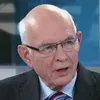 Ross Healy
Unknown
COMMENT
S&P500 He sees technical support for the S&P at 2.5 times book value -- about 2505. Until then it is still a bull market. The ceiling is 3080 -- fair market value.
Ross HealyUnknown

COMMENT
Golden opportunity to get into healthcare? Positives are there such as aging population, developing markets, new technologies set the stage for long-term positive dynamics. In the shorter term, polarized extreme views have come out, but there's no substance to them. The correction is just noise, and it's a well-timed entry point in the sector. Bernie Sanders' "medicare for all" inspired a downturn. Technical healthcare names have held up.
COMMENT
Medical device ETF? Likes medical devices, and they've significantly outperformed the other sub-sectors. Tend to be less susceptible to the political noise. Great earnings growth. But if we see an improvement to some of the other sub-sectors, we could see them underperform the others. So have a diversified portfolio in that space.
N/A
Market. The message the market is giving us is that it is very tuned in to what the Fed is doing. A rate rise from 2-4% is a doubling but from 8-10% in the past, is not as big. It influences those using debt to finance their operations. Interest rates are the single biggest factor in the valuation of assets – present / future value. The bar-bell strategy is paying off for him. He is much more conservatively positioned now. He does not own bit coin at this point. He has assets that can do better as the market goes higher in the short term but others that will do better if the market starts to go downward.
 Jason Del Vicario
Unknown
COMMENT
Market Outlook - This market got very overbought. It needed an excuse to sell off. A market that continues to trend up. The rumor is that we will see a deal with China next week. He thinks that if we don't see a robust deal, the market could sell off. The bar was low for earnings. There is a kind of all-clear. Another concern that was put aside for now. Tomorrow's print on jobs is going to be in line.

COMMENT
Market Outlook. There appears to be a disconnect between the stock market and the economic outlook. Markets are buoyant, while companies continue to load up on debt. Companies have been beating earnings expectations, but earnings growth is deceleration. Share buybacks have been supporting the market, but he thinks now is the time to be more cautious. Watch companies that may have a hard time maintaining dividends.
 Michael Sprung
Unknown
COMMENT
Energy stocks for diversification? He is a firm believer in diversification and Energy has a good valuation. He might expect to see increased M&A activity by the stronger players. He wouldn't make a huge play in energy right now if you are retired -- it all depends on your personal situation.
Michael SprungUnknown
COMMENT
Today, the markets sold off after Powell's remarks this afternoon. He's not sure why, but he expects the markets to continue to rise. The Fed must be cautious with rates going forward, and they need to see strong data to support a rise. He's starting to see some exhaustion in his market indicators, though he sees good recovery from his technical indicators. Loblaws reported same-store sales declines today.

COMMENT
Is it smart to sell cannabis producers and buy cannabis retailers who enjoy wider margins? The big issue with retail is weak supply. Once supply ramps up, then retailers will enjoy ramped-up earnings. True, retail margins are strong, but in five years probably, retailers will be as common as liquor stores. Meta Cannabis Supply is a good retailer to buy with more outlets than all, positive revenues as well as earnings.
COMMENT
The Canadian banks: yes, there are concerns, but are already reflected in the stock prices which have been flat--though earnings are rising and solid. In fact, based on earnings, the banks are a third cheaper than in 2007-8. He doesn't see much downside going forward, and the bank dividends are safe and growing. The banks are good long-term holds. True, loan losses will hurt the stock one day, but the market isn't currently paying a high multiple for these stocks. Energy stocks vs. crude oil prices: it's an opportunity to buy Canadian companies as they report their latest earnings in May. It's a pity that foreign investors aren't buying Canadian oil stocks, but we'll see if they take notice with these reports.

COMMENT
What proportion of bank earnings are not from the loan book? Much less than 50% of their revenues come from loans. But if those loans good bad, they will overwhelm earnings. This is what short-sellers are arguing--big loan losses. Provisions for credit losses in the US are double than in Canada; this shows how competitive their lending environment is. We have a different attitude here from walking away from loans, so he doesn't see a mass exodus from paying off loans in Canada unless there is a massive macro-economic shock globally, largely American.
'%20fill='%23ffffff'%3e%3cg%20id='Pager'%20transform='translate(423.000000,%201755.000000)'%3e%3cpath%20d='M243.295367,17.286474%20C243.68919,16.9045087%20244.327703,16.9045087%20244.721525,17.286474%20L249,21.4361302%20L253.278475,17.286474%20C253.672297,16.9045087%20254.31081,16.9045087%20254.704633,17.286474%20C255.098456,17.6684393%20255.098456,18.2877274%20254.704633,18.6696927%20L249.35654,23.856763%20C249.159628,24.0477457%20248.840372,24.0477457%20248.64346,23.856763%20L243.295367,18.6696927%20C242.901544,18.2877274%20242.901544,17.6684393%20243.295367,17.286474%20Z'%20id='Path'%20transform='translate(249.000000,%2020.500000)%20scale(-1,%201)%20rotate(-90.000000)%20translate(-249.000000,%20-20.500000)%20'%3e%3c/path%3e%3c/g%3e%3c/g%3e%3c/g%3e%3c/svg%3e)
'%20fill='%23ffffff'%3e%3cg%20id='Pager'%20transform='translate(423.000000,%201755.000000)'%3e%3cpath%20d='M243.295367,17.286474%20C243.68919,16.9045087%20244.327703,16.9045087%20244.721525,17.286474%20L249,21.4361302%20L253.278475,17.286474%20C253.672297,16.9045087%20254.31081,16.9045087%20254.704633,17.286474%20C255.098456,17.6684393%20255.098456,18.2877274%20254.704633,18.6696927%20L249.35654,23.856763%20C249.159628,24.0477457%20248.840372,24.0477457%20248.64346,23.856763%20L243.295367,18.6696927%20C242.901544,18.2877274%20242.901544,17.6684393%20243.295367,17.286474%20Z'%20id='Path'%20transform='translate(249.000000,%2020.500000)%20rotate(-90.000000)%20translate(-249.000000,%20-20.500000)%20'%3e%3c/path%3e%3c/g%3e%3c/g%3e%3c/g%3e%3c/svg%3e)