Halloween Sale
50% off Premium Yearly
A Comment -- General Comments From an Expert (A Commentary)
Company Highlight: Northland Power Inc. (NPI)
NPI is a diversified Canadian utilities company specializing in developing offshore wind and onshore renewable energy projects. NPI was established in 1987 and is one of Canada’s first independent power producers and is now headquartered in Toronto with global offices in eight countries. NPI owns an economic interest in 3.4 GW (net 2.9 GW) of operating generating capacity and a significant inventory of early-to-mid-stage development opportunities encompassing approximately 15 GW of potential capacity. The company’s primary focus is on offshore wind, onshore renewable solar, wind, and battery storage.
Unlock Premium - Try 5i Free


The Value of Dividends + Indexing:
Most media outlets report on how the S&P/TSX composite, S&P 500, Dow Jones or Nasdaq indexes are doing. In almost every case, however, they are reporting an incomplete picture. Most quoted indexes do not include dividends. A better index to use, especially when looking at annual returns, is a total return index.
For example, the S&P/TSX composite in 2023 rose eight per cent, but its total return index rose 11.8 per cent. It is important to include dividends when comparing investment performance because they form a very big part of a portfolio’s total return.
Unlock Premium - Try 5i Free
Believes inverted yield curve, and strength in markets pointing towards a "tale of two cities". Would advise investors to be prepared in the case of a market sell off. Investors should pursue a policy that takes advantage of market strength, while also protects them against economic slowdown. If US Fed doesn't cut rates soon enough, may not be in time to save "weakening" consumer base. Rotation out of "narrow" tech names also very good sign for the broader markets. Question is whether sector rotation will continue, out of tech into other sectors of the economy.


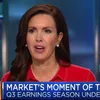
September will definitely be volatile, through October in the U.S. election. She has some cash after taking some gains tech. A rate cut cycle is coming and we got through Nvidia, whose report was good, and the economy is good (decent GDP number and real income) to set up decent earnings. Will buy any dips.

Company Highlight: Union Pacific Corporation (UNP)
Union Pacific Corporation (UNP) operates as one of the largest railroad companies in the US. The business model is very similar to CNR, aside from one drawback that UNP’s shipment volume growth over the years has not been as strong as CNR.
The rail industry is largely mature, with the growth algorithm to be in the range of 1%-2% in volume and 3%-5% in pricing. The industry has been in consolidation mode for years, and operational efficiency has been the key lever to create shareholder value. That being said, the business has tremendously strong staying power, and investors can comfortably own UNP for decades without worrying too much about technological disruption. Additionally, the company has a track record of consistently growing dividends over time was quite impressive, 10-year dividend growth was around 11% on average. In addition, UNP bought back around 32% of the total share outstanding in the last ten years.
Looking at its financials, we see its valuation over the past 10 years has been consistent, this is largely because UNP is perceived as a low-risk, cash cow type of company. There is some cyclicality to its earnings due to the inherent cyclicality of the rail business which is sensitive to the macro environment.
Unlock Premium - Try 5i Free
;fill-opacity:1;'/%3e%3cpath%20d='M31%2018.6001V30H8V18.6001L14.1334%2022.4334L19.4999%2014L24.8669%2022.4334L31%2018.6001Z'%20fill='%23EE5432'%20style='fill:%23EE5432;fill:color(display-p3%200.9340%200.3310%200.1956);fill-opacity:1;'/%3e%3c/svg%3e) Premium content
Premium content- Super Micro Computer (SMCI-Q)
- Fair Isaac Corp. (FICO-N)
- Antero Resources (AR-N)
- Occidental Petroleum Corp (OXY-N)
- NVIDIA Corporation (NVDA-Q)
- Invesco QQQ Trust Series 1 (QQQ-Q)
- Intel (INTC-Q)
- Chewy, Inc. (CHWY-N)
- CVS Health Corp (CVS-N)
- Arbor Realty Trust (ABR-N)
- Annaly Capital Management Inc. (NLY-N)
- AT&T (T-N)
- Intuitive Machines (LUNR-Q)
- Easterly Government Properties (DEA-N)
- Mastercard Inc. (MA-N)

He doesn't like to do either. He's after GARP (growth at a reasonable price) at all times. NVDA is undisputed leader in the sector. Companies are going to have to continue to invest heavily, whether talking about end users of AI or cloud services.
The concern is do we see deceleration in growth momentum at some point for a company like NVDA that, for now at least, is predominantly hardware. We've seen that in the past with other producers. We'll see a bit more growth out of NVDA before concerns about it stalling.

He's more invested right now than he'd have thought. It's been a generally constructive summer. With the US election, and turbulence in September/October, he'd anticipate talking about de-risking right now. The game has changed in the last 3 weeks, market participants are a bit more confident to look for opportunities and get their feet back in the water. He puts himself in that camp.
Have to be careful in the discretionary space. Canada has had rate cuts and will have more by year's end, and the question is have we caught it soon enough to prevent demand decay in the consumer space. If we haven't, consumer discretionary is going to be pressured.
In the case of a MCD or QSR, we shouldn't see that same sensitivity to economic growth. He's not saying we're in the all-clear, but if we do get rate cuts to the extent that the market thinks we are, those recessionary or negative growth fears start to wane. Which means we can look at the consumer space a bit more positively.
Getting a place. You can see by the earnings projections of NVDA that infrastructure is going to continue to grow. Think of it like a wheel. In the middle, you have data and the hyperscalers. Around it is model training like GOOG, META, MSFT -- where they train the models to digest data and deliver a result. Outside of that are the applications.
Everyone's been waiting for the infrastructure to get set up. It's set up, but has a long runway. He thinks the interesting area is around the model training, as it can also extend into the applications. You can see it being monetized in healthcare and entertainment.

Company Highlight: Canadian National Railway Company (CNR)
Canadian National Railway (CNR) is one of the largest railroads in North America. The company has been around for many decades and operates in a favourable industry structure as a duopoly along with Canadian Pacific Kansas City (CP) in Canada. CNR has been one of the most solid performers in the Canadian industrial sectors over the years. CNR’s 20-year total return was around 14.4% compounded annual growth rate (CAGR) with dividends included.
In terms of its financials, it pays a decent dividend yield of 2.0%, along with a 4.4% share buyback yield on the trailing twelve-month basis. It has demonstrated a solid organic growth profile over the years due to the tremendous pricing power of the rails industry. Going forward, management expects to continue to compound its EPS in the range of 12%-15% over the long term. It trades at a reasonable valuation of 19.5X forward earnings, a slight discount to the company’s historical averages but on par with the overall industry.
We believe that CNR’s management can continue to grow organically through a combination of volume growth and price adjustment over time along with improved operational efficiency to create long-term shareholder value. CNR has shareholder-friendly policies with a generous capital returns program that is partially supported by a moderately leveraged balance sheet. We think the company is an above-average operator in the industry that trades at an attractive valuation.
Unlock Premium - Try 5i Free
'%20fill='%23ffffff'%3e%3cg%20id='Pager'%20transform='translate(423.000000,%201755.000000)'%3e%3cpath%20d='M243.295367,17.286474%20C243.68919,16.9045087%20244.327703,16.9045087%20244.721525,17.286474%20L249,21.4361302%20L253.278475,17.286474%20C253.672297,16.9045087%20254.31081,16.9045087%20254.704633,17.286474%20C255.098456,17.6684393%20255.098456,18.2877274%20254.704633,18.6696927%20L249.35654,23.856763%20C249.159628,24.0477457%20248.840372,24.0477457%20248.64346,23.856763%20L243.295367,18.6696927%20C242.901544,18.2877274%20242.901544,17.6684393%20243.295367,17.286474%20Z'%20id='Path'%20transform='translate(249.000000,%2020.500000)%20scale(-1,%201)%20rotate(-90.000000)%20translate(-249.000000,%20-20.500000)%20'%3e%3c/path%3e%3c/g%3e%3c/g%3e%3c/g%3e%3c/svg%3e)
'%20fill='%23ffffff'%3e%3cg%20id='Pager'%20transform='translate(423.000000,%201755.000000)'%3e%3cpath%20d='M243.295367,17.286474%20C243.68919,16.9045087%20244.327703,16.9045087%20244.721525,17.286474%20L249,21.4361302%20L253.278475,17.286474%20C253.672297,16.9045087%20254.31081,16.9045087%20254.704633,17.286474%20C255.098456,17.6684393%20255.098456,18.2877274%20254.704633,18.6696927%20L249.35654,23.856763%20C249.159628,24.0477457%20248.840372,24.0477457%20248.64346,23.856763%20L243.295367,18.6696927%20C242.901544,18.2877274%20242.901544,17.6684393%20243.295367,17.286474%20Z'%20id='Path'%20transform='translate(249.000000,%2020.500000)%20rotate(-90.000000)%20translate(-249.000000,%20-20.500000)%20'%3e%3c/path%3e%3c/g%3e%3c/g%3e%3c/g%3e%3c/svg%3e)