Halloween Sale
50% off Premium Yearly
A Comment -- General Comments From an Expert (A Commentary)
ETFs good for a long-term hold in a TFSA? Big advantage of ETFs is they give you instant diversification. If you want something fairly stable, BMO covered call for banks would be good. Canadian bank index has outperformed the TSX significantly over the years. Covered call ETF gives a better yield than a straight bank index, and banks are one of the best areas to invest in Canada.
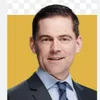
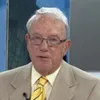 David Cockfield
Utilities -- buy now or wait? If you need income, and you can get 5.5% return on ETFs, he prefers those. Best GIC yield you’ll get is only 3.5%, and fully taxable. Look at the ETF’s yield and if it has good diversification, you can buy at any time.
David CockfieldCanadian banks. They own TD because of its US presence, and BMO has a good yield and has entered the US. They’re buying Canadian banks with offshore holdings in North America, rather than in Europe.
David CockfieldMarket. Big cap tech and small cap stocks are up and the rest are down. Canada is now matching the US coming off energy. For the second half of this year, just don't lose. Sometimes playing not to lose is more important than the win. The good news with tax cuts are behind us. There are headwinds in the US. Facing us in Canada are rising interest rates, housing and NAFTA. Reset your expectations in terms of what returns you can earn in all asset classes. There is a risk of a 'made in Canada' recession. We had an energy bounce but we can’t get our product out of the country. He would prefer to hold a bit of cash and you get a bit of reward for it this year.
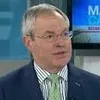 Lyle Stein
Market. Longer term it is undeniable health care is one of the sectors benefiting directly from an aging population. This is a permanent non-cyclical thematic. Shorter term the political noise is changing with the FDA and the Administration and even with Amazon entering the space. But valuations haven’t been at these levels in the last 15-20 years. Because of that, he thinks it is a good entry point for somebody looking at the middle to long term horizon. He thinks this is not for the novice investor. You want diversity in the space. Individual stock risk could be very high.
 Paul MacDonald
What company is going to take the lead on oncology? Merck & Co (MRK-N) came with data at a recent conference in Chicago that puts them at the forefront in this area. He has been advocating this for a coupe of years. He would own a basket. Bristol-Myers Squibb (BMY-N) and Astrazeneca ADS (AZN-N) would also be part of that basket.
Paul MacDonaldCan you recommend a safe and with a modest yield Canadian name in the sector? He can’t in Canada. The sector is only 3% of the Canadian Market but 15% globally. He would look at an ETF.
Paul MacDonaldWill the US dollar strength affect pharmaceutical companies’ earnings - yes, some impact particularly for those US names with global revenues.
Paul MacDonaldMarket. Fourth of July is not a good day to trade in Canada, with the lack of liquidity from the closure of US markets. If you can, wait a day. As the mid-term elections in the US approach, he thinks much of this trade war rhetoric is positioning ahead of the elections. There is nothing worse for economies and stock markets than protectionism, he says. A 25% tariffs on cars, for example, would kill the auto market in North America. He has been a seller recently to shore up cash just in case in his portfolios. He is not foreseeing a recession just yet, but he is being cautious. He expects the Bank of Canada to raise rates by 0.25% next week.
 Norman Levine
Cannabis. He has nothing against “sin” stocks. However, he sees the industry in its infancy and does not know what the future margins and earnings will be. The current valuations are too risky. Some players will survive, but would recommend waiting to see how things settle. The easy money has been made.
Norman LevineNow, you have tailwinds vs. headwinds: solid economic data and corporate earnings from the U.S. vs. esclating trade tensions around the world. If there's easing of the latter, then we can see a longer bull-market ride. Be in cyclicals. The
defensives including telecoms have done well the past few months, but now he suggests moving into cyclicals. About 75% of his holdings are in the U.S., especially consumer discretionary. He's also being cautious by taking profits faster, and hecurrently holds 12-15% cash which is higher than his 5% norm. He holds FANG stocks like Facebook and Google and some semiconductor manufacturers. He has sold his Canadian oil stocks as the price rose. He's not sure that oil can continue to push higher.
Canadian vs. U.S. stocks: Given the exchange rate, is it worth buying U.S. stocks? He gets this question a lot. He says it's not a loss necessary. The U.S. has performed better than Canada in the past decade. He still likes the U.S. and holds most of his equities there. Tax reform and fiscal stimulus are tailwinds. NAFTA will be tougher on Canada than America. The S&P has returned twice as much than the TSX over the past two years.
Trump is the biggest influence on the market, both tailwind and headwind: the U.S. tax reform to lower corporate rates, then starts a trade war, creating a vacuum of uncertainty. Is he doing this to open markets down the road? If so, they should play out by the end of 2018, which is a good impetus for markets. Investors should look at assets not as impacted by trade, but benefit from the tax cuts, such as the banks and tech companies. He doesn't believe the US has huge trade surpluses as Trump claims, because so much of U.S. output is services.

'%20fill='%23ffffff'%3e%3cg%20id='Pager'%20transform='translate(423.000000,%201755.000000)'%3e%3cpath%20d='M243.295367,17.286474%20C243.68919,16.9045087%20244.327703,16.9045087%20244.721525,17.286474%20L249,21.4361302%20L253.278475,17.286474%20C253.672297,16.9045087%20254.31081,16.9045087%20254.704633,17.286474%20C255.098456,17.6684393%20255.098456,18.2877274%20254.704633,18.6696927%20L249.35654,23.856763%20C249.159628,24.0477457%20248.840372,24.0477457%20248.64346,23.856763%20L243.295367,18.6696927%20C242.901544,18.2877274%20242.901544,17.6684393%20243.295367,17.286474%20Z'%20id='Path'%20transform='translate(249.000000,%2020.500000)%20scale(-1,%201)%20rotate(-90.000000)%20translate(-249.000000,%20-20.500000)%20'%3e%3c/path%3e%3c/g%3e%3c/g%3e%3c/g%3e%3c/svg%3e)
'%20fill='%23ffffff'%3e%3cg%20id='Pager'%20transform='translate(423.000000,%201755.000000)'%3e%3cpath%20d='M243.295367,17.286474%20C243.68919,16.9045087%20244.327703,16.9045087%20244.721525,17.286474%20L249,21.4361302%20L253.278475,17.286474%20C253.672297,16.9045087%20254.31081,16.9045087%20254.704633,17.286474%20C255.098456,17.6684393%20255.098456,18.2877274%20254.704633,18.6696927%20L249.35654,23.856763%20C249.159628,24.0477457%20248.840372,24.0477457%20248.64346,23.856763%20L243.295367,18.6696927%20C242.901544,18.2877274%20242.901544,17.6684393%20243.295367,17.286474%20Z'%20id='Path'%20transform='translate(249.000000,%2020.500000)%20rotate(-90.000000)%20translate(-249.000000,%20-20.500000)%20'%3e%3c/path%3e%3c/g%3e%3c/g%3e%3c/g%3e%3c/svg%3e)